
 SL
Kazalo
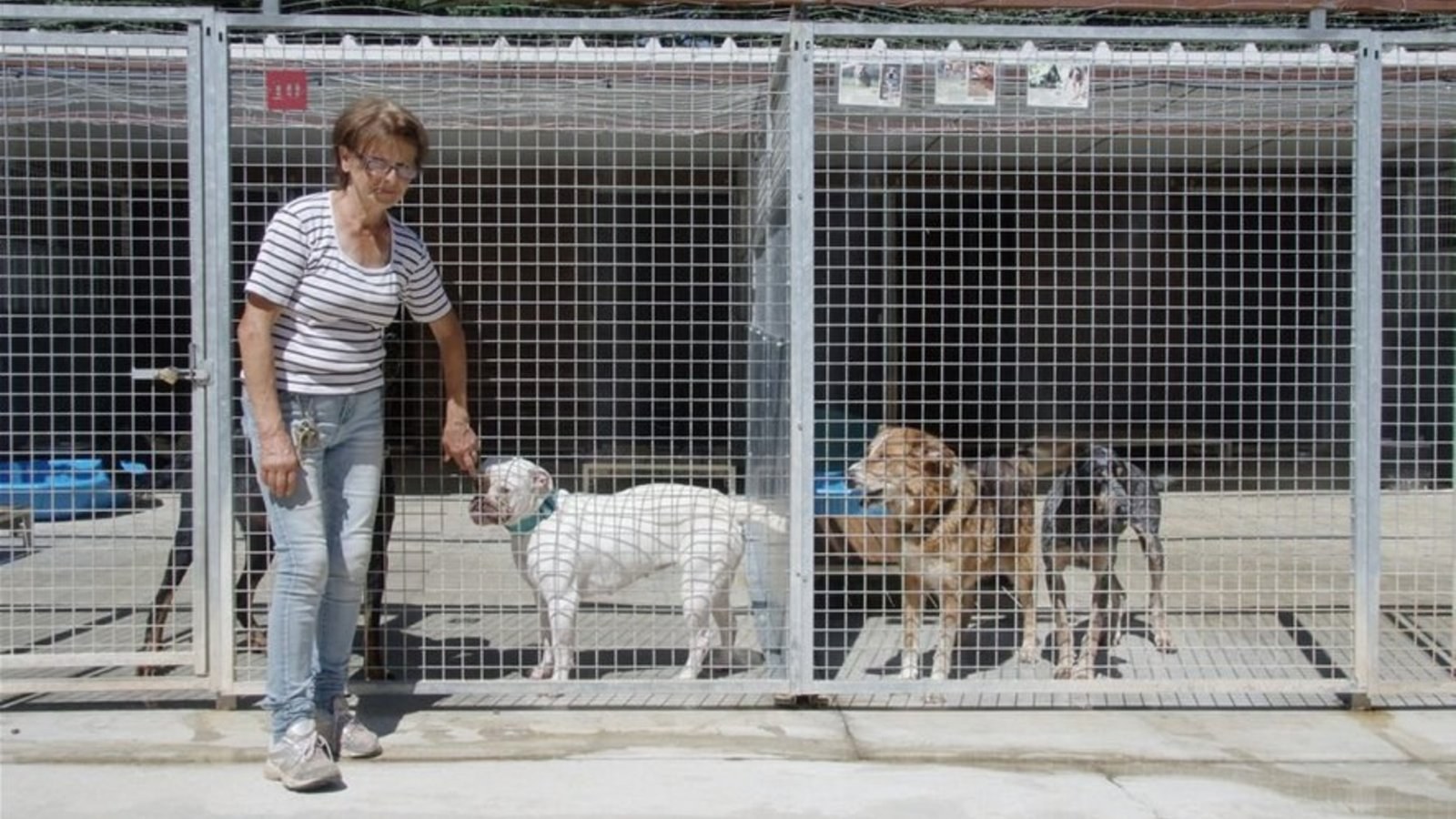
Across Europe, the summer exodus to the sea, the mountains or the countryside brings a rise in the number of pets abandoned every year. Each summer, more and more dogs and cats are left by the roadside. According to National Geographic, France holds the unenviable European record: the 30 Millions d’Amis Foundation and the Société protectrice des animaux (SPA), France’s main animal welfare charity, put the figure at around 100,000 animals a year, almost 60,000 of them during the summer holidays alone1.
Interactive chart — the data are listed below.
Chart data
| Period | Animals abandoned (estimate) |
|---|---|
| Summer holidays | 60 000 |
| Rest of the year | 40 000 |
Abandonments jumped by around 25% in 2021, as the Covid-19 pandemic receded. During the lockdowns, many people had taken on a pet on impulse, to keep themselves busy or to have a reason to go out: walking the dog was one of the reasons accepted on the travel exemption form. Once life returned to “normal”, shaped by the demands of work, many French people found that they did not have enough time for their animal.
Abandoning a pet is nonetheless a criminal offence in France. Article 521-1 of the Criminal Code treats it as an act of cruelty, punishable by three years in prison and a €45,000 fine, rising to five years and €75,000 when the animal dies2. EU law, by contrast, contains no regulation or directive that expressly prohibits abandonment: the ban comes from Council of Europe law, as we will see below. EU law has nevertheless moved a long way over the past decade.
The legal status of animals has also changed in France. Until 2015, the Civil Code classed them as “movable property” (Article 528) or “immovables by destination” (Article 524). Law No. 2015-177 of 16 February 2015 created Article 515-14, which defines animals as “living beings endowed with sentience”. The text recognises their sentience without changing their legal regime: the same article specifies that, subject to the laws that protect them, animals remain governed by the rules on property3.
The figures from France’s neighbours are just as striking. In Spain, shelters took in 292,018 dogs and cats in 2024, more than 33 animals an hour and one of the highest levels of the decade4. In Germany, according to PETA, up to 80,000 dogs, cats, rabbits, exotic animals and other pets are abandoned every summer at motorway service areas, at the end of isolated country lanes or in forests. Founded at the end of 1993, PETA Deutschland is the country’s largest animal protection organisation, and the PETA network claims more than 10.4 million supporters worldwide5.
In the United Kingdom, abandonments are rising despite legislative progress and awareness campaigns. According to data from the RSPCA (Royal Society for the Prevention of Cruelty to Animals) reported by The Guardian, they rose by almost 25% in England and Wales between 2024 and 2025, the sharpest increase for at least five years6. The cost of living is a major factor: many Britons fear they can no longer cover both their own expenses and their pet’s vet bills.
How is animal welfare regulated in Europe?
Two legal orders coexist: the conventions of the Council of Europe, which apply only to the states that have ratified them, and European Union law, which applies directly in all twenty-seven Member States.
- Council of Europe
- European Union
- France
- 1978Council of EuropeEntry into force of the European Convention for the Protection of Animals kept for Farming Purposes
- 1979European UnionBirds Directive (79/409/EEC)
- 1992Council of EuropeEntry into force of the Convention for the Protection of Pet Animals, signed in 1987
- 1992European UnionHabitats Directive (92/43/EEC), the basis of the Natura 2000 network
- 2003FranceFrance ratifies the Convention for the Protection of Pet Animals
- 2004European UnionBan on animal testing of finished cosmetic products
- 2007European UnionBan on trade in cat and dog fur
- 2009European UnionArticle 13 TFEU recognises animals as “sentient beings”; the testing ban is extended to cosmetic ingredients
- 2013European UnionBan on selling cosmetics tested on animals
- 2015FranceCivil Code: animals become “living beings endowed with sentience”
- 2021European UnionEnd the Cage Age: the Commission promises a legislative proposal by 2023
- 2021FranceLaw of 30 November against animal cruelty
- 2025European UnionEFSA opinion on fur farming; political agreement on cats and dogs
- 2026European UnionAdoption of the regulation on cats and dogs; roadmap on animal testing
Signed in 1987 under the auspices of the Council of Europe and in force since 1992, the European Convention for the Protection of Pet Animals is one of the first texts devoted to the legal protection of animals in Europe7. It binds only the states that have ratified it; France did so only in 2003. The treaty defines what a pet animal is and sets the principles governing its keeping, its trade and its use in shows or competitions. It prohibits selling a pet animal to anyone under 16 without their parents’ consent and provides for measures to reduce the number of stray animals. Article 10 bans surgical operations performed for non-curative purposes, such as declawing, removing the vocal cords, or docking ears or tails. Finally, Article 3 lays down the basic principles of animal welfare, including the ban on abandonment:
“Nobody shall cause a pet animal unnecessary pain, suffering or distress. Nobody shall abandon a pet animal.”
EU law protects animal welfare too. Article 13 of the Treaty on the Functioning of the European Union (TFEU) recognises animals as sentient beings whose welfare must be paid full regard: all EU legislation in this field rests on this provision. For farm animals, the EU also relies on the European Convention for the Protection of Animals kept for Farming Purposes, another Council of Europe text, which entered into force in 1978 and was approved by the European Community the same year. These rules draw on the principle of the “five freedoms”, formalised in 1979 by the UK Farm Animal Welfare Council in the wake of the 1965 Brambell report, and since taken up by EU law and by international organisations8:
- freedom from hunger and thirst;
- freedom from discomfort;
- freedom from pain, injury and disease;
- freedom to express normal behaviour;
- freedom from fear and distress.
When citizens move European law forward
Several recent advances in European law owe a great deal to European citizens’ initiatives (ECIs). An initiative that gathers one million verified signatures, with a minimum reached in at least seven Member States, obliges the European Commission to respond publicly. Three ECIs on animals have crossed that threshold.
Interactive chart — the data are listed below.
Chart data
| Initiative | Verified signatures |
|---|---|
| Fur Free Europe (2023) | 1 502 319 |
| End the Cage Age (2020) | 1 397 113 |
| Save Cruelty Free Cosmetics (2023) | 1 217 916 |
Submitted in October 2020, the “End the Cage Age” initiative had gathered 1,397,113 verified signatures across eighteen Member States. It was the first successful ECI on the welfare of farm animals9. On 30 June 2021, the Commission committed to presenting, by the end of 2023, a legislative proposal to phase out and then ban cages for the species concerned. It did not keep to that timetable: at the end of 2025, the proposal had still not been tabled, drawing sharp criticism from several animal protection organisations10. The Commission also planned to adapt the Common Agricultural Policy (CAP) to help farmers modernise their facilities. The European Food Safety Authority (EFSA), for its part, was asked to assess the risks that cages pose to the welfare of the species concerned: pigs, laying hens, calves, rabbits, ducks, geese…
In 2023, the “Fur Free Europe” ECI gathered 1,502,319 verified signatures. It called for a ban on “the keeping and killing of animals for the sole or main purpose of fur production” and on “the placing of farmed animal fur, and products containing such fur, on the EU market”. The Commission referred the matter to EFSA, whose scientific opinion, published on 30 July 2025, covers the American mink, the red fox, the Arctic fox, the raccoon dog and the chinchilla. It bears out the criticism levelled at these farms: in all species, EFSA identified restricted movement, the inability to explore or forage, and sensory under- and overstimulation as welfare consequences. The Authority concludes that, in current systems, these consequences can be neither prevented nor substantially mitigated11.
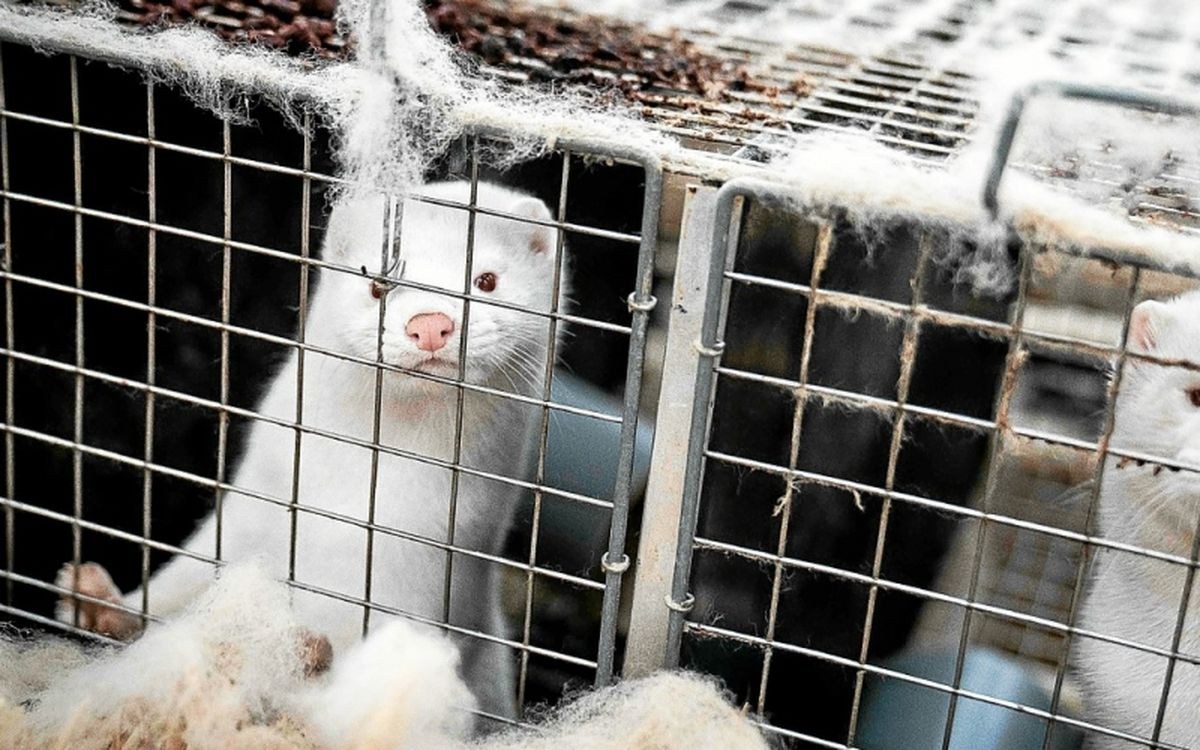
In the EU, the sale of cat and dog fur has been banned since 2007 (Regulation (EC) No 1523/2007). In France, the law of 30 November 2021 against animal cruelty toughened the penalties for mistreating domestic animals. It also bans “farms for American mink and animals of other non-domestic species bred exclusively for fur production”, and is gradually ending the keeping of wild animals in travelling circuses and dolphinariums.
Animal testing
The EU also regulates the use of animals for scientific purposes, whether to develop medicines or to assess food additives and chemical substances. Directive 2010/63/EU rests on the principle of the “three Rs”:
- Replace: use other methods wherever possible
- Reduce: use fewer animals for the same research
- Refine: minimise pain and suffering
For cosmetics, the EU has gone as far as an outright ban. Animal testing has been prohibited for finished products since 2004 and for ingredients since 2009; since 2013, it has also been illegal to sell in the EU any cosmetic tested on animals elsewhere in the world12. The measure carries real weight: Europe is the world’s largest cosmetics market, a sector that employs two million people there13. In a 2018 resolution, the European Parliament called for a worldwide ban on such testing, which 80% of countries still allow. It wants to pursue the issue at the United Nations and to ensure that neither trade agreements nor World Trade Organization (WTO) rules weaken the EU’s bans.
The “Save Cruelty Free Cosmetics – Commit to a Europe without Animal Testing” citizens’ initiative, launched in 2021, was submitted in January 2023 with 1,217,916 verified signatures14. The Commission followed it up on 1 June 2026 by adopting a roadmap to phase out animal testing in chemical safety assessments15.
Cats and dogs: the first European rules
On 28 April 2026, MEPs adopted, by 558 votes to 35 with 52 abstentions, the very first EU-wide minimum standards for the protection of cats and dogs16. The text follows the provisional political agreement reached with the Council on 26 November 2025; the Member States in turn formally adopted it on 22 May 202617 18.
Interactive chart — the data are listed below.
Chart data
| Vote | MEPs |
|---|---|
| For | 558 MEPs |
| Abstention | 52 MEPs |
| Against | 35 MEPs |
The regulation bans several practices regarded as cruel. Mutilations carried out without medical grounds (docking tails or ears, removing vocal cords) are prohibited. It also outlaws breeding animals with extreme physical traits that harm their health, such as brachycephaly: the exaggeratedly flat muzzle found in some lines of bulldogs and pugs, which causes severe breathing problems19. Prong and electric collars are banned as well, with limited exceptions, notably for dogs working with the police, the armed forces and customs.
The text also harmonises the conditions for breeding, keeping and selling animals across the EU, and tackles illegal trafficking. The trade in cats and dogs is worth €1.3 billion a year in the EU, and 60% of owners buy their animal online, which often leaves its origin and state of health in the dark. According to a European Commission study, the illegal trade comes mainly from two Member States, Romania and Hungary, and from third countries such as Russia, Belarus, Serbia and Turkey20.
Until now, each Member State applied its own rules, often very different from those of its neighbours. The regulation now requires every cat and dog in the EU to be microchipped and registered; private owners have ten years to comply for dogs and fifteen years for cats. National databases will be accessible to other Member States, which should make it possible to detect illegal movements.
Conclusion
Animals and their welfare are protected in Europe by a body of texts drawn partly from the Council of Europe and partly from the European Union. Yet the gap between the rules and reality is sometimes considerable, whether for pets, farm animals or wildlife. Citizens’ initiatives and awareness campaigns have helped to reduce mistreatment and acts of cruelty. The first common rules on the breeding, import and traceability of cats and dogs mark a milestone in this respect: for the first time, the EU itself sets a baseline of protection for companion animals. It remains to be seen whether the Commission will finally keep its promise on cages.
Viri
- 30 Millions d'Amis La France championne d'Europe des abandons d'animaux : le palmarès de la honte. Dostopno na: https://www.30millionsdamis.fr (Dostopano 08/11/2026).
- Légifrance Article 521-1 du code pénal. Dostopno na: https://www.legifrance.gouv.fr (Dostopano 08/11/2026).
- Dalloz Étudiant Point sur le statut juridique de l'animal. Dostopno na: https://actu.dalloz-etudiant.fr (Dostopano 08/11/2026).
- Fondation Affinity (2025) Él nunca lo haría. Dostopno na: https://www.fundacion-affinity.org (Dostopano 08/11/2026).
- PETA Deutschland e.V. Ausgesetzte Tiere : Infos und Tipps zur Hilfe im Notfall. Dostopno na: https://www.peta.de/themen/ausgesetzte-tiere (Dostopano 08/11/2026).
- The Guardian (2025) Dog and cat abandonment soars in UK as owners struggle with cost of living. Dostopno na: https://www.theguardian.com (Dostopano 08/11/2026).
- Conseil de l'Europe (1987) Convention européenne pour la protection des animaux de compagnie (STE n° 125). Dostopno na: https://www.coe.int/fr/web/conventions/full-list?module=treaty-detail&treatynum=125 (Dostopano 08/11/2026).
- Farm Animal Welfare Council (1979) Five Freedoms.
- Parlement européen (2021) Résolution du 10 juin 2021 sur l'initiative citoyenne européenne « End the Cage Age ». Dostopno na: https://www.europarl.europa.eu (Dostopano 08/11/2026).
- Humane World for Animals (2026) End the Cage Age: What happened to the European Commission's promise?.
- EFSA (2025) Bien-être du vison d'Amérique, du renard roux, du renard arctique, du chien viverrin et du chinchilla destinés à la production de fourrure. Dostopno na: https://www.efsa.europa.eu (Dostopano 08/11/2026).
- EUR-Lex (2009) Règlement (CE) n° 1223/2009 relatif aux produits cosmétiques. Dostopno na: https://eur-lex.europa.eu/eli/reg/2009/1223/oj (Dostopano 08/11/2026).
- Parlement européen Produits cosmétiques testés sur les animaux : vers une interdiction mondiale !. Dostopno na: https://www.europarl.europa.eu (Dostopano 08/11/2026).
- Initiative citoyenne européenne (2023) Successful 'Save Cruelty Free Cosmetics' ECI submitted to the European Commission for examination. Dostopno na: https://citizens-initiative.europa.eu/news/successful-save-cruelty-free-cosmetics-eci-submitted-european-commission-examination-2023-01-26_en (Dostopano 08/11/2026).
- Commission européenne (2026) Feuille de route pour l'élimination progressive de l'expérimentation animale aux fins de l'évaluation de la sécurité chimique.
- Parlement européen (2026) Premières règles de l'UE pour protéger les chiens et les chats de maltraitance. Dostopno na: https://www.europarl.europa.eu (Dostopano 08/11/2026).
- Vie-publique.fr (2025) Protection des chiens et chats : l'UE s'accorde sur de nouvelles règles. Dostopno na: https://www.vie-publique.fr (Dostopano 08/11/2026).
- Conseil de l'Union européenne (2026) Bien-être des chiens et des chats et leur traçabilité : adoption de l'acte législatif. Dostopno na: https://www.consilium.europa.eu (Dostopano 08/11/2026).
- Le Fonds Saint-Bernard (2026) Bien-être des chiens et chats : pourquoi l'Europe interdit enfin certaines pratiques d'élevage.
- Euronews (2025) La nouvelle loi sur le bien-être animal freinera-t-elle le commerce illégal ?. Dostopno na: https://fr.euronews.com (Dostopano 08/11/2026).
- Agence européenne pour l'environnement Natura 2000. Dostopno na: https://www.eea.europa.eu/en/analysis/maps-and-charts/natura-2000 (Dostopano 08/11/2026).
- Légifrance (2021) Loi n° 2021-1539 du 30 novembre 2021 visant à lutter contre la maltraitance animale. Dostopno na: https://www.legifrance.gouv.fr (Dostopano 08/11/2026).
- Wikipédia Convention européenne pour la protection des animaux de compagnie.
- EUR-Lex Bien-être des animaux. Dostopno na: https://eur-lex.europa.eu (Dostopano 08/11/2026).
- Parlement européen Comment l'UE protège-t-elle le bien-être animal et la vie sauvage ?. Dostopno na: https://www.europarl.europa.eu (Dostopano 08/11/2026).
- Touteleurope.eu (2026) Bien-être animal : le Parlement européen approuve les premières règles communes pour protéger chiens et chats. Dostopno na: https://www.touteleurope.eu (Dostopano 08/11/2026).
- 30 Millions d'Amis La fourrure d'animaux sauvages bientôt interdite en Europe ?. Dostopno na: https://www.30millionsdamis.fr (Dostopano 08/11/2026).
- Initiative citoyenne européenne Portail officiel. Dostopno na: https://citizens-initiative.europa.eu (Dostopano 08/11/2026).
Komentarjev še ni.