
 EN
EN 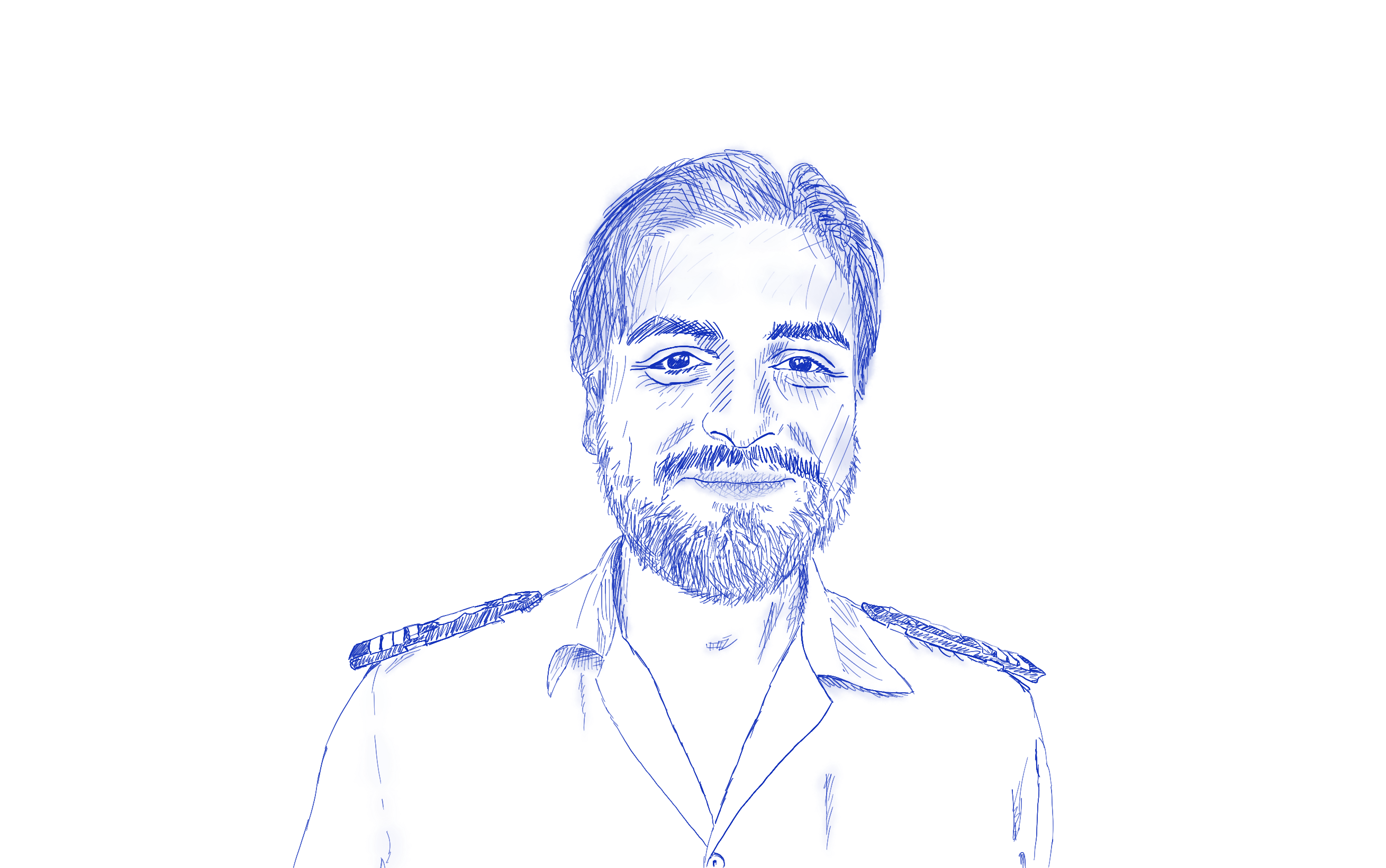
Confronted with the military escalation in the Middle East and Washington's strategic decoupling, the European Union finds itself at a critical turning point. In this interview with PromethEUs, Lieutenant Commander Guillaume Bucherer, desk officer at the Joint Staff of the Armed Forces (Military International Relations Division - EU Bureau), analyzes the internal fault lines among the 27, the realistic risks of the conflict expanding, and the urgent need for Europe to break free from its dependencies to build its own industrial and military sovereignty.

PromethEUs
Coline Eyssautier & Lilà Schwartz

Guillaume Bucherer
Head of European Union Military Operations and Missions at the Joint Staff of the Armed Forces (France)
PromethEUs
Could you explain what your role involves?
Guillaume Bucherer
My work as a desk officer—that is the generic name for the position—deals with European Union operations and missions and contributes to shaping the position of the EMA (Joint Staff of the Armed Forces) and the Ministry of the Armed Forces on all CSDP initiatives. It also involves advising political-military authorities, drafting talking points, formulating positions and advice, participating in meetings that determine the French stance on specific subjects, and monitoring daily news from various regions to know how to adjust our position if necessary.
PromethEUs
First of all, the European Union seems caught in a vise between the major powers.
In this context and in this war, how could the EU maintain a degree of credibility, especially given the rift between European reactions—for instance, Spain standing up to Donald Trump, or the United Kingdom refusing to contribute directly to this war?
In this context and in this war, how could the EU maintain a degree of credibility, especially given the rift between European reactions—for instance, Spain standing up to Donald Trump, or the United Kingdom refusing to contribute directly to this war?
Guillaume Bucherer
It reveals deep fault lines, but they are neither new nor abnormal. We must not forget that on the scale of a continent with such turbulent neighbors on all sides and threats coming from the southern flank, the Middle East, or Russia, it is not unusual to have fracture lines on international issues.
Where the European Union was fairly united was when it refused to follow Donald Trump down the path to war. Firstly, because it was not informed from the beginning, much like its member states.
In fact, what interests the EU is securing its commercial supply lines: the stability of the European economic model relies on global stability, and therefore on the stability of these trade flows. Thus, the idea of destabilizing a region crossed by our maritime trade routes—the very routes that enable the continent's prosperity—is always viewed very negatively.
There are indeed very different positions, but we shouldn't lose sight of the fact that Spain distanced itself quite strongly from the United States. This is a position held by the Sanchez government for quite some time. On the other hand, we see that the Polish and Baltic states, which would like to help President Trump in the war in Iran, are not doing so out of direct national interest. They are doing so out of indirect national interest. That is to say, they believe that if NATO fails to answer the American call, US aid will not come on the day they need to be defended against Russia.
Where the European Union was fairly united was when it refused to follow Donald Trump down the path to war. Firstly, because it was not informed from the beginning, much like its member states.
In fact, what interests the EU is securing its commercial supply lines: the stability of the European economic model relies on global stability, and therefore on the stability of these trade flows. Thus, the idea of destabilizing a region crossed by our maritime trade routes—the very routes that enable the continent's prosperity—is always viewed very negatively.
There are indeed very different positions, but we shouldn't lose sight of the fact that Spain distanced itself quite strongly from the United States. This is a position held by the Sanchez government for quite some time. On the other hand, we see that the Polish and Baltic states, which would like to help President Trump in the war in Iran, are not doing so out of direct national interest. They are doing so out of indirect national interest. That is to say, they believe that if NATO fails to answer the American call, US aid will not come on the day they need to be defended against Russia.
PromethEUs
Iranian drones have already struck Azerbaijan in early March, as well as the British base in Cyprus. What is the risk of the conflict spilling over into the Caucasus or Southern Europe? And of course, by extension, toward the EU's borders?
Guillaume Bucherer
So, for us, based on short-term forecasting, the risk is not zero, but we identify it as quite low. The Iranian proxies capable of firing toward the EU's borders are not doing so to alienate the European Union. They are doing it so that we ourselves increase pressure on the United States, telling them: "Be careful, by firing at the Iranians, they are firing at our territory because of the war for which you are responsible."
Even actors in the Caucasus, with an assertive Azerbaijan, will see an opportunity to destabilize. But if the Iranian regime falls, it will not seek direct confrontation because it knows it cannot compete. It will not be supported, perhaps not even by Turkey or Russia.
So there is no longer any incentive. That is why I think the risk of a spillover into the EU is quite low.
Regarding Cyprus, we can see that we are not dealing with a deluge of fire like in Israel, for example, so all of this should be taken with a grain of salt. I think it is an opportunity for Europeans to test their internal solidarity.
That is what Cyprus is doing. There has been a lot of talk about NATO's article, but the country is not bound by that article, but rather by Article 42-7 of the EU Treaty. Although they haven't invoked it, I think Cyprus is trying to test the sincerity of the British in helping them first. We see that they are not stepping up. For Cyprus, it was a trauma: not only is the British presence not a security reassurance, but it turns them into a target.
On top of that, they share very little intelligence and are incapable of protecting Cypriot airspace. So the Cypriots are thinking that perhaps they should turn toward the Europeans.
That is why Greece and France responded to Cyprus's call.
Even actors in the Caucasus, with an assertive Azerbaijan, will see an opportunity to destabilize. But if the Iranian regime falls, it will not seek direct confrontation because it knows it cannot compete. It will not be supported, perhaps not even by Turkey or Russia.
So there is no longer any incentive. That is why I think the risk of a spillover into the EU is quite low.
Regarding Cyprus, we can see that we are not dealing with a deluge of fire like in Israel, for example, so all of this should be taken with a grain of salt. I think it is an opportunity for Europeans to test their internal solidarity.
That is what Cyprus is doing. There has been a lot of talk about NATO's article, but the country is not bound by that article, but rather by Article 42-7 of the EU Treaty. Although they haven't invoked it, I think Cyprus is trying to test the sincerity of the British in helping them first. We see that they are not stepping up. For Cyprus, it was a trauma: not only is the British presence not a security reassurance, but it turns them into a target.
On top of that, they share very little intelligence and are incapable of protecting Cypriot airspace. So the Cypriots are thinking that perhaps they should turn toward the Europeans.
That is why Greece and France responded to Cyprus's call.
PromethEUs
Regarding the intensification of threats to maritime navigation, is Europe considering an extension of Operation EMASoH/AGENOR (European-led maritime awareness in the Strait of Hormuz) or a new naval coalition independent of the United States?
Guillaume Bucherer
Absolutely. First of all, EMASoH/AGENOR no longer exists; it was conducted to secure maritime traffic in the Strait of Hormuz during the summer of 2019, when the Revolutionary Guards carried out their first attacks on civilian cargo ships. It was an ad-hoc coalition, not originating from the EU, created to avoid aligning with the Trump administration's maximum pressure policy at the time. We had already noted that the EU was not yet in a position to act effectively.
Since then, there has been Operation Aspides, which made it possible to negotiate with the Spaniards to cover the strait within the area of operation, though without the same rules of engagement.
We quickly realized that it would be virtually impossible. In fact, member states in the European Council decided that would not be the case. It was almost impossible to use Aspides to reopen the Strait of Hormuz. President Macron had the idea of an ad-hoc coalition of the willing to open the strait. We are trying to ensure it includes other partners like Japan, South Korea, and India, which are directly impacted by the closure.
Since then, there has been Operation Aspides, which made it possible to negotiate with the Spaniards to cover the strait within the area of operation, though without the same rules of engagement.
We quickly realized that it would be virtually impossible. In fact, member states in the European Council decided that would not be the case. It was almost impossible to use Aspides to reopen the Strait of Hormuz. President Macron had the idea of an ad-hoc coalition of the willing to open the strait. We are trying to ensure it includes other partners like Japan, South Korea, and India, which are directly impacted by the closure.
PromethEUs
With escalating tensions, what reinforced protection measures are being taken at the European level against potential Iranian cyberattacks on our critical infrastructure, such as IT or power grids, ports, or hospitals?
Guillaume Bucherer
It is very specific, but measures are being taken because they were anticipated. For instance, the creation of a cybersecurity center of excellence by the EU is currently underway. These cyberprotection measures are implemented at the EU level as much as possible because our networks are particularly interconnected and integrated. Many databases belonging to EU institutions like Eurojust or Europol are distributed across certain EU countries. Their vulnerability is real. We are striving to address it as effectively as possible by deploying cybersecurity measures. In any case, I can tell you that it is being well managed by our member states and by the EU as such.
PromethEUs
In your opinion, what are the main risks of military escalation in the coming weeks or months?
Guillaume Bucherer
Very clearly, the coming months will be decisive regarding the involvement of Gulf countries. That is to say, it is not so much their military power relative to a heavily armed Iran—since the missile fired at Diego Garcia is symptomatic of a military capability that was, in my view, underestimated by US intelligence. The risk of conflagration begins there. For the Gulf states, if their energy security is compromised, their entire societal model is compromised as well. In my opinion, they will not stand by and could join the American front. If that happens, Donald Trump's attitude toward his allies will change, strengthening ties with the countries that backed him against Iran. There will then be a quasi-automatic and certain crowding-out effect regarding European allies.
PromethEUs
Regarding this crowding-out effect you mentioned, it seems almost inevitable that Europe will be removed from the list of US allies, given that Europeans appear unmotivated to participate in this war.
Guillaume Bucherer
This is my personal analysis, but I think that for now, we are underestimating the test Donald Trump is conducting. Donald Trump, and indeed all US administrations since Obama, view China as their systemic rival. What Trump wants to know, feeling tied hand and foot by NATO, is whether NATO and European allies will stand by him in the event of a major clash between the United States and China. Syria, Russia, Venezuela—which represented a significant source of oil for China—and now Iran.
This coalition mentioned earlier to free the Strait of Hormuz would be formed without the United States; that is the political directive. Trump concludes and considers that if Europeans are incapable of confronting a secondary country at his request, he loses interest in the EU's new security threats, because for the United States, Russia is no longer a security threat. We even see that conservative movements in the US and Russia align on a number of points. The test for Donald Trump is very clear, and we did not pass it. I think in the coming months, we should expect very stormy NATO summits, which could present an opportunity for the EU to forge its strategic autonomy.
This coalition mentioned earlier to free the Strait of Hormuz would be formed without the United States; that is the political directive. Trump concludes and considers that if Europeans are incapable of confronting a secondary country at his request, he loses interest in the EU's new security threats, because for the United States, Russia is no longer a security threat. We even see that conservative movements in the US and Russia align on a number of points. The test for Donald Trump is very clear, and we did not pass it. I think in the coming months, we should expect very stormy NATO summits, which could present an opportunity for the EU to forge its strategic autonomy.
PromethEUs
Speaking of oil, we know that since the start of the war in Iran, fuel and oil prices have surged: do you think we could face a prolonged crisis in European energy security?
Guillaume Bucherer
Yes, completely, and not necessarily in a direct manner. France is relatively protected regarding heating and primary energy consumption thanks to our nuclear fleet. Von der Leyen acknowledges that abandoning nuclear energy was a strategic mistake. Better late than never. Yes, there are already repercussions on oil, but those won't be the only ones. Even our cars might risk no longer being repairable or updated, nor our software, because servers won't be available and won't have replacement parts. In my view, fuel is just the tiny tip of a gigantic iceberg.
PromethEUs
Between Ukraine's needs and the urgency in the Middle East, is there a risk that Europe might find itself disarmed when it comes to guaranteeing our own territorial defense, particularly in the event of new Russian attacks?
Guillaume Bucherer
That is precisely the fine line and the balancing act we are navigating. To be entirely honest, for now, Ukrainian issues at the EU level have been completely set aside. Previously, there was only Ukraine, while non-Ukraine files were piling up on Kaja Kallas's desk. Today, the Near/Middle East and Iran take precedence, and Ukraine feels completely abandoned by Europeans. Nevertheless, arms transfers and training have not stopped. We must not miss the momentum to help Ukraine at a time when it can achieve significant victories that would position it strongly in eventual negotiations with the Russians. On the question of disarmament: if we disarm completely, that is indeed the problem.
Our production and manufacturing capacity for ammunition or equipment simply cannot keep pace with the intensification of the battlefields. Let me remind you that virtually the entire French Navy is at sea right now, even though, factually speaking, we are not at war. If you will, there is a disconnect in our production, which was highly technological and suffered from a lack of orders. Manufacturers say they can get into battle formation, but they need orders and visibility. If you want to produce more than four missiles a year, then you need to order around twenty missiles a year. Deliveries to Ukraine have cost us dearly: after all, these are Rafale jets intercepting drones at €30,000 or €50,000 per flight hour. You quickly realize the cost-benefit ratio does not favor the one sending the Rafale. These solutions will take time, requiring the rebuilding of an autonomous defense industry across its supply chain. That is not the case today given our dependence on rare metals.
Secondly, public procurement must meet the scale of the challenge. This is something the European Commission understood well when it began creating instruments like EDIP, EDIS, and SAFE. Joint procurement of ammunition is the key to winning any prospective war or supporting our allied nations.
Our production and manufacturing capacity for ammunition or equipment simply cannot keep pace with the intensification of the battlefields. Let me remind you that virtually the entire French Navy is at sea right now, even though, factually speaking, we are not at war. If you will, there is a disconnect in our production, which was highly technological and suffered from a lack of orders. Manufacturers say they can get into battle formation, but they need orders and visibility. If you want to produce more than four missiles a year, then you need to order around twenty missiles a year. Deliveries to Ukraine have cost us dearly: after all, these are Rafale jets intercepting drones at €30,000 or €50,000 per flight hour. You quickly realize the cost-benefit ratio does not favor the one sending the Rafale. These solutions will take time, requiring the rebuilding of an autonomous defense industry across its supply chain. That is not the case today given our dependence on rare metals.
Secondly, public procurement must meet the scale of the challenge. This is something the European Commission understood well when it began creating instruments like EDIP, EDIS, and SAFE. Joint procurement of ammunition is the key to winning any prospective war or supporting our allied nations.
PromethEUs
Regarding the fact that most French naval vessels are deployed at sea, is this also the case for other European countries? Is France an isolated case?
Guillaume Bucherer
Yes, it is virtually the case for all the others. For us, there are rotations, but others—take the Belgian frigates, for example—only have two, while the Dutch have four. All it takes is a scheduled exercise somewhere, or NATO requesting them in the Baltic or Mediterranean where they have deployed vessels for their own operations, for Aspides, Irini, or Atalanta (the EU's three naval operations), or being called upon by coalitions of the willing, or other vessels being drydocked for repairs, and suddenly there is no navy left in Europe. They are all overstretched, as the Dutch tell us despite their good—albeit small—navy, or the Germans, who don't want to deploy much anyway. When all is said and done, they don't have a massive fleet either.
The Greeks have many frigates, as do the Italians, but they are also heavily solicited all over the world. It is not normal that with 300 million inhabitants, the United States fields eleven aircraft carriers—seven of which are active—and seven autonomous fleets, whereas Europeans, whose economic power is greater and who combine 450 million inhabitants, barely manage to field a single aircraft carrier.
I know there are Italian and Spanish helicopter carriers, but those don't offer quite the same capabilities as an aircraft carrier. We don't have a structured fleet like the United States. We have the French carrier strike group at best, but that's about it.
The Greeks have many frigates, as do the Italians, but they are also heavily solicited all over the world. It is not normal that with 300 million inhabitants, the United States fields eleven aircraft carriers—seven of which are active—and seven autonomous fleets, whereas Europeans, whose economic power is greater and who combine 450 million inhabitants, barely manage to field a single aircraft carrier.
I know there are Italian and Spanish helicopter carriers, but those don't offer quite the same capabilities as an aircraft carrier. We don't have a structured fleet like the United States. We have the French carrier strike group at best, but that's about it.
PromethEUs
All of this would require a union that is more political and military than the current European Union, which remains predominantly focused on the economy.
Guillaume Bucherer
Taking off my rank as a French army officer—because this is by no means the official French stance—it is clear that an essential federal leap forward is required. In truth, we have 27 dwarf armies struggling to achieve basic interoperability. But how long has NATO existed? NATO has existed for 70 years, and we realize that we are still not fully interoperable between units.
These are somewhat controversial points raised by Andrius Kubilius, the EU Defense Commissioner, who noted in his personal op-eds that we are 27 dwarf armies. We have 27 armies struggling to staff crews, whereas if we had authorization, for example, to have multinational crews on our vessels, we would already have far fewer recruitment issues. There are many underlying challenges because that is the theory: first, a common language. A very good baseline level of English would be required among all European citizens.
In military terms, command responsibility is also a true political and philosophical question: responsibility for the blood spilled. Whether it is your own blood shed in fulfilling a military mission or the blood of your enemy, in both cases, you have to take ownership.
These are somewhat controversial points raised by Andrius Kubilius, the EU Defense Commissioner, who noted in his personal op-eds that we are 27 dwarf armies. We have 27 armies struggling to staff crews, whereas if we had authorization, for example, to have multinational crews on our vessels, we would already have far fewer recruitment issues. There are many underlying challenges because that is the theory: first, a common language. A very good baseline level of English would be required among all European citizens.
In military terms, command responsibility is also a true political and philosophical question: responsibility for the blood spilled. Whether it is your own blood shed in fulfilling a military mission or the blood of your enemy, in both cases, you have to take ownership.
PromethEUs
In light of everything you've said, do you still think the EU can play a role as a mediator in the context of Iran and the United States? Is Europe currently credible?
Guillaume Bucherer
It is credible because its diplomatic positioning is reassuring. People feel that with us, we might not be geniuses, but at least we aren't madmen.
If Europeans manage to reach a common stance among all 27 member states, it will be reassuring. Europe will only be credible if it shows it can deploy military assets. Power dynamics are changing, so people subject to international law want to modify it to create another legal framework in their favor. We Europeans believed, somewhat naïvely, that every society in the world would adopt our vision of international law, but many simply endured it. They want a say in the next international legal order, with their interests taken into account. That is why China wants to reclaim its island chain. These are simply movements showing that these countries are now in an economic, diplomatic, and military position to claim their piece of the pie in the global order and shape the emerging legal or political order.
If Europeans manage to reach a common stance among all 27 member states, it will be reassuring. Europe will only be credible if it shows it can deploy military assets. Power dynamics are changing, so people subject to international law want to modify it to create another legal framework in their favor. We Europeans believed, somewhat naïvely, that every society in the world would adopt our vision of international law, but many simply endured it. They want a say in the next international legal order, with their interests taken into account. That is why China wants to reclaim its island chain. These are simply movements showing that these countries are now in an economic, diplomatic, and military position to claim their piece of the pie in the global order and shape the emerging legal or political order.
Europe must relearn the language of power
Guillaume Bucherer
... not necessarily violence, but power, even if it wasn't built for that. At some point, it will have to break free from the shackles and bars of a prison it constructed itself, which exists only in its mind.
PromethEUs
The US-Iran crisis terrifies and raises questions for many regarding the conflict escalating into a supposed "Third World War." What are your estimates today, and how would you respond to these speculations?
Guillaume Bucherer
World War III has effectively begun as a sort of cold world war. It is a hybrid mix that is very uncomfortable for our traditional military thinkers, leading to a great deal of uncertainty.
The only real large-scale war is the Russo-Ukrainian war. It involves far more casualties than we could politically tolerate. Even 3,000 deaths a month is unimaginable for French society. Today, I think we are in a third world war in the sense that it is a period of geopolitical transition where the world clashes—not just on military battlefields, but across economic, energy, technological, regulatory, and soft-power domains.
The considerable efforts poured into respective narratives are, in my view, a very strong indicator that the battlefield is being fought in perceptions. The Israelis, for example, will never abandon military action, but they know full well they have lost the narrative battle. Even while trying to emphasize October 7th or that the other side started it, they know that on a global scale, they lost the narrative as well as UN votes on resolutions condemning them. Regarding Ukraine, for example, the very first UN votes in its favor were quite sparse outside Western spheres, but over time, African countries are realizing that the Russians are not as reliable an ally as thought.
After all, the Russians were unable to protect Bashar al-Assad's regime and did nothing to prevent the capture of the Venezuelan president. Today, they are completely unable to help Iran, despite it being their strategic partner in the region. They did nothing for Armenia when it was attacked by Azerbaijan, even though it was an ally that had chosen to rely on Russia for protection.
African regimes in the Sahel are realizing that if Bamako is surrounded by jihadists and taken one day, the Russians will not come to their rescue. We see votes in the General Assembly shifting, along with narratives.
We are in World War III, to put it without illusions. A new global order will emerge from the conclusion of these confrontations. That is what defines a world war: in the aftermath of World War I, the global order changed, and after World War II, it changed again.
The end of the Cold War was the prelude to this reconfiguration we've experienced since two days before September 11, with the assassination of Commander Massoud in Afghanistan on September 9, 2001. That is what allowed Al-Qaeda to carry out its attack in the United States and completely reshape the global chessboard. As for Europe's place in all of this, it is up to us—and to you, as European citizens—to shape it.
The only real large-scale war is the Russo-Ukrainian war. It involves far more casualties than we could politically tolerate. Even 3,000 deaths a month is unimaginable for French society. Today, I think we are in a third world war in the sense that it is a period of geopolitical transition where the world clashes—not just on military battlefields, but across economic, energy, technological, regulatory, and soft-power domains.
The considerable efforts poured into respective narratives are, in my view, a very strong indicator that the battlefield is being fought in perceptions. The Israelis, for example, will never abandon military action, but they know full well they have lost the narrative battle. Even while trying to emphasize October 7th or that the other side started it, they know that on a global scale, they lost the narrative as well as UN votes on resolutions condemning them. Regarding Ukraine, for example, the very first UN votes in its favor were quite sparse outside Western spheres, but over time, African countries are realizing that the Russians are not as reliable an ally as thought.
After all, the Russians were unable to protect Bashar al-Assad's regime and did nothing to prevent the capture of the Venezuelan president. Today, they are completely unable to help Iran, despite it being their strategic partner in the region. They did nothing for Armenia when it was attacked by Azerbaijan, even though it was an ally that had chosen to rely on Russia for protection.
African regimes in the Sahel are realizing that if Bamako is surrounded by jihadists and taken one day, the Russians will not come to their rescue. We see votes in the General Assembly shifting, along with narratives.
We are in World War III, to put it without illusions. A new global order will emerge from the conclusion of these confrontations. That is what defines a world war: in the aftermath of World War I, the global order changed, and after World War II, it changed again.
The end of the Cold War was the prelude to this reconfiguration we've experienced since two days before September 11, with the assassination of Commander Massoud in Afghanistan on September 9, 2001. That is what allowed Al-Qaeda to carry out its attack in the United States and completely reshape the global chessboard. As for Europe's place in all of this, it is up to us—and to you, as European citizens—to shape it.
PromethEUs
If we are already in this third world war, does that mean that in the coming years, as long as Trump remains in power, we shouldn't be surprised if he triggers new conflicts with other countries surrounding Iran? Should we expect Trump to attack Afghanistan?
Guillaume Bucherer
Not necessarily new conflicts. I think the war with Iran gave him a bit of a reality check. First, he realizes he does not agree with the war aims of his Israeli ally. Trump sees that domestic opposition in the United States exists and is very real. Finally, he sees that his European allies did not follow him. On the other hand, it means that in the years ahead, others will feel emboldened.
An American administration failing to bend the Iranian regime is fantastic news for China. It means Taiwan could be theirs within 24 hours. So the Senkaku Islands, the Spratly Archipelago, or the Philippines—and in the unlikely but not impossible event that China not only attacks Taiwan, but also attacks the Philippines following a staged or opportunistic casus belli...
Do we see an exhausted America, coming off a war against Iran, immediately moving to save the Philippines? Always ask yourself who acts as the police officer and who acts as the judge.
An American administration failing to bend the Iranian regime is fantastic news for China. It means Taiwan could be theirs within 24 hours. So the Senkaku Islands, the Spratly Archipelago, or the Philippines—and in the unlikely but not impossible event that China not only attacks Taiwan, but also attacks the Philippines following a staged or opportunistic casus belli...
Do we see an exhausted America, coming off a war against Iran, immediately moving to save the Philippines? Always ask yourself who acts as the police officer and who acts as the judge.
PromethEUs
If you had to identify the main strategic challenge for Europe in this crisis, what would it be?
Guillaume Bucherer
There are so many that it is difficult to single out just one. I think Europe's primary strategic challenge is internal. It really comes down to the evolution of our mindset, upon which all other roadblocks depend. Let me give you a hint from outside the military domain. We are completely dependent on lithium batteries produced by other countries; we do not control that supply. In Auvergne, there is an existing kaolin mine where lithium deposits were discovered.
The French state believes it can resolve this sovereignty issue by exploiting this already operational mine to extract lithium for our military equipment and other needs. That would allow us to be somewhat self-sufficient in certain sectors. Yet, local populations do not want to hear about opening a lithium mine near their homes, for understandable reasons.
Opening a mine is politically sensitive and can lead to confrontations. We see the rise of "ZAD" protest camps or opposition groups, like in Sainte-Soline over water reservoirs. We often hear criticisms when the European Union engages with China: Will it discuss human rights with China? In China, the foremost rights are economic security—such as the right to eat. Otherwise, the regime falls. We remain in a state where no one is satisfied.
I believe there is a lack of real understanding of the state of the world among our fellow citizens. Re-educating and re-informing public opinion about the realities of value chains, global economics, military threats, and those who harbor ill intent toward us is, in my view, the starting point to internalize that the world has become hostile again. We are no longer in a position to impose our will: we must get back to work or be condemned to vassalage—though remaining perpetual vassals can also be a political choice.
The French state believes it can resolve this sovereignty issue by exploiting this already operational mine to extract lithium for our military equipment and other needs. That would allow us to be somewhat self-sufficient in certain sectors. Yet, local populations do not want to hear about opening a lithium mine near their homes, for understandable reasons.
Opening a mine is politically sensitive and can lead to confrontations. We see the rise of "ZAD" protest camps or opposition groups, like in Sainte-Soline over water reservoirs. We often hear criticisms when the European Union engages with China: Will it discuss human rights with China? In China, the foremost rights are economic security—such as the right to eat. Otherwise, the regime falls. We remain in a state where no one is satisfied.
I believe there is a lack of real understanding of the state of the world among our fellow citizens. Re-educating and re-informing public opinion about the realities of value chains, global economics, military threats, and those who harbor ill intent toward us is, in my view, the starting point to internalize that the world has become hostile again. We are no longer in a position to impose our will: we must get back to work or be condemned to vassalage—though remaining perpetual vassals can also be a political choice.
PromethEUs
Regarding North Korea's position in the US-Iran conflict: although mocked on social media, is there a kernel of truth to it? Is it a serious suggestion that Kim Jong Un could intervene in defense of Iran?
Guillaume Bucherer
They have taken actions before, as you know—they sent troops to Ukraine. The military benefit for North Korea there was virtually zero. The Russians have very little leverage regarding sanctions relief and no desire to share nuclear secrets with an immediate neighbor.
Yes, North Korea could always intervene, but I think it remains focused on acquiring nuclear capability and consolidating the regime economically.
As for its military involvement, we don't know what North Korea is worth in combat. They might supply missiles or delivery systems to the Iranians if they run short, but I doubt North Korean soldiers will risk their country's reputation as they did in Russia, for example. North Korea derived no benefit from that.
Yes, North Korea could always intervene, but I think it remains focused on acquiring nuclear capability and consolidating the regime economically.
As for its military involvement, we don't know what North Korea is worth in combat. They might supply missiles or delivery systems to the Iranians if they run short, but I doubt North Korean soldiers will risk their country's reputation as they did in Russia, for example. North Korea derived no benefit from that.
PromethEUs
Do you have a final point or another perspective to share?
Guillaume Bucherer
I think from an EU perspective, it will be interesting to see how the next European Commission positions itself on these matters. It recognizes that if a cross-border, cross-sectoral crisis hits—simultaneously affecting energy, wildfires, hybrid threats, a disinformation campaign, power outages, a military threat, naval mines, drone incursions, etc.—we are not prepared.
The Commission is asking itself what needs to be done to prepare for high-intensity scenarios.
For both internal and external crises, the traditional view was that NATO handles territorial defense while the EU manages external crises. That framework no longer works, because external crises inevitably impact our borders. Neither NATO nor the EU currently knows how to address these cross-sectoral threats.
The European Commission's ultimate hurdle remains the intergovernmental nature of defense issues. Yet, it is envisioned in the treaties: the EU's objective leads toward a common defense. One day or another, I believe the European Union will hold competence over its own territorial defense.
The Commission is asking itself what needs to be done to prepare for high-intensity scenarios.
For both internal and external crises, the traditional view was that NATO handles territorial defense while the EU manages external crises. That framework no longer works, because external crises inevitably impact our borders. Neither NATO nor the EU currently knows how to address these cross-sectoral threats.
The European Commission's ultimate hurdle remains the intergovernmental nature of defense issues. Yet, it is envisioned in the treaties: the EU's objective leads toward a common defense. One day or another, I believe the European Union will hold competence over its own territorial defense.
Confronted with the military escalation in the Middle East and Washington's strategic decoupling, the European Union finds itself at a critical turning point. In this interview with PromethEUs, Lieutenant Commander Guillaume Bucherer, desk officer at the Joint Staff of the Armed Forces (Military International Relations Division - EU Bureau), analyzes the internal fault lines among the 27, the realistic risks of the conflict expanding, and the urgent need for Europe to break free from its dependencies to build its own industrial and military sovereignty.
References
- No sources yet.
No comments yet.