
 EN
Contents
A Historic Convergence in the Eye of the Political Storm
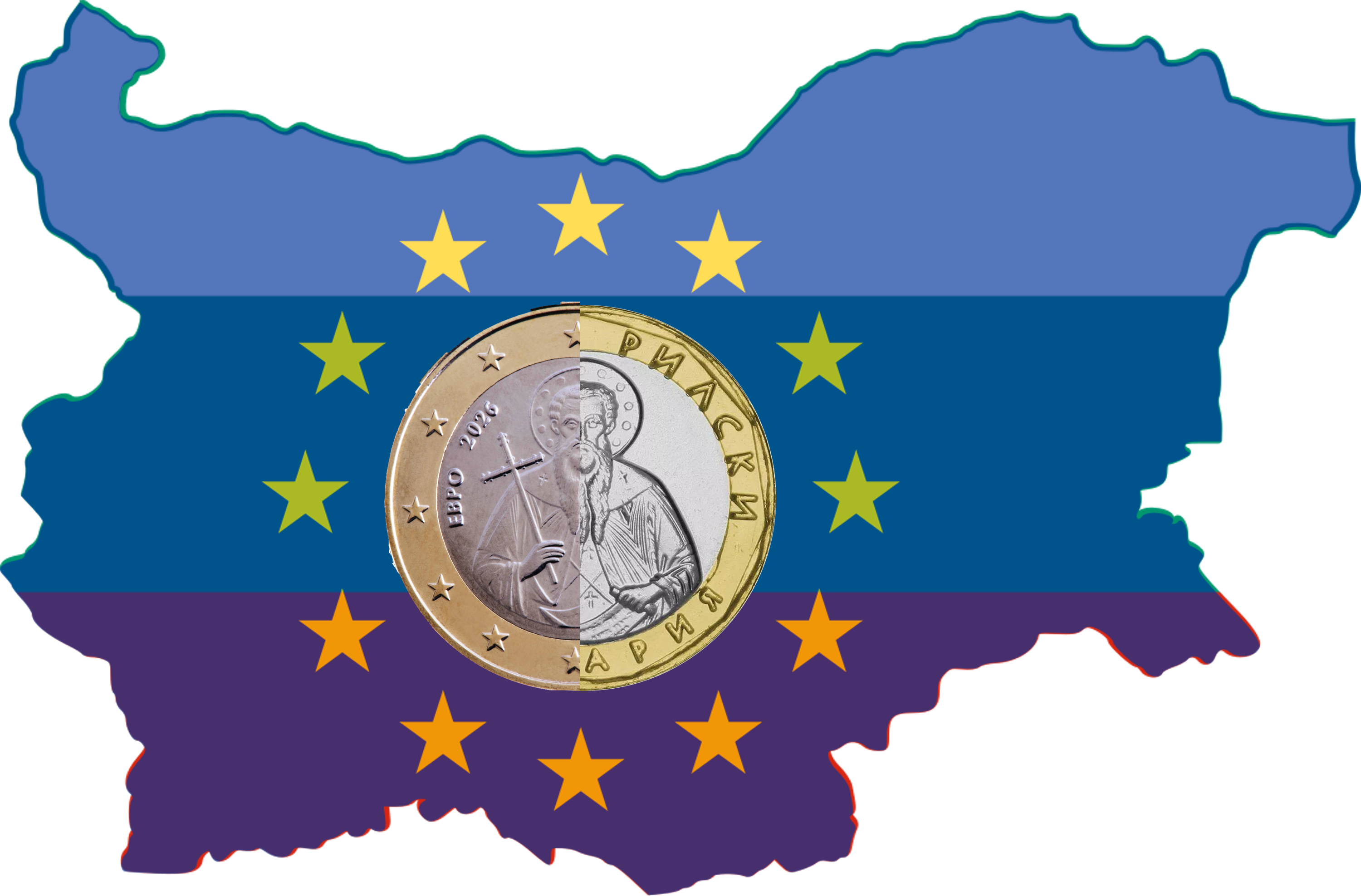
January 1, 2026, will remain etched in the annals of European integration as the day the Eurozone extended its borders to the shores of the Black Sea. By becoming the 21st member state of the Economic and Monetary Union (EMU), Bulgaria completes a post-communist transition cycle that began three decades ago. At midnight, as fireworks illuminated the neoclassical facade of the Bulgarian National Bank (BNB) in Sofia, projecting the euro symbol onto the institution's columns, the country celebrated a major technocratic victory.
Yet, this consecration takes place within a climate of absolute paradox. The adoption of the single currency—the ultimate symbol of stability and trust—occurs while the country is navigating one of the most acute political legitimacy crises in its recent history. Just three weeks before "D-Day," on December 11, 2025, the government of Prime Minister Rossen Jeliazkov was forced to resign under the pressure of massive protests denouncing the high cost of living, corruption, and unpopular fiscal projects. This striking contrast—an irreversible monetary integration steered by a resilient administration against a backdrop of chronic parliamentary volatility—defines the singularity of the Bulgarian experience.
Chapter 1: The Legacy of Stability — From the 1997 Trauma to the Euro
To understand the Bulgarian collective psychology regarding the euro, it is essential to revisit the founding trauma of the hyperinflation during the winter of 1996-1997. At that time, the collapse of the banking system and monthly inflation exceeding 240% wiped out household savings and brought the economy to its knees. From these ashes, a national consensus for monetary stability was born, materialized by the adoption of a draconian regime: the Currency Board.
1.1 The Currency Board Mechanism: A De Facto Pre-Adhesion
Unlike most countries that join the Eurozone after a period of managed floating of their currency (such as Poland or Hungary, which retain this flexibility), Bulgaria has lived under a strict fixed exchange rate regime since July 1, 1997.
Definition: Currency Board
A currency board is a monetary authority whose sole function is to issue notes and coins convertible on demand into a foreign reserve currency (the anchor) at a fixed and unchangeable exchange rate. Unlike a traditional central bank, it lacks discretionary power to create money (printing press) to finance state deficits or to act as a lender of last resort for banks in difficulty. The national monetary base must be covered 100% (or more) by foreign exchange reserves in the anchor currency.
In the Bulgarian case, the lev was first pegged to the Deutsche Mark, then mechanically to the euro upon its creation in 1999, at the irrevocable rate of 1.95583 BGN for 1 EUR.
This specificity is crucial for the analysis:
- Absence of monetary shock: Bulgaria has imported Frankfurt's monetary policy (first the Bundesbank, then the ECB) for nearly 30 years. Bulgarian interest rates have followed, with a risk premium, the movements of the Eurozone. Joining the euro in 2026 therefore does not constitute a loss of monetary sovereignty, as that sovereignty had already been voluntarily abandoned to guarantee stability.
- Acquired credibility: By maintaining this fixed rate without devaluation through the 2008 crisis, the Eurozone crisis (2010-2012), and COVID-19, the Bulgarian economy proved its capacity for internal adjustment (wage or employment cuts) rather than through exchange rates, demonstrating resilience in line with the requirements of a monetary union.
1.2 ERM II and the Banking Union: The Home Stretch
Entry into the European Exchange Rate Mechanism II (ERM II), often called the "euro's waiting room," in July 2020, marked the official start of the process.
However, a major innovation distinguished the Bulgarian (and Croatian) path from previous enlargements: the obligation to simultaneously join the Banking Union via the "close cooperation" mechanism. This meant that even before adopting the euro, Bulgarian systemic banks had to come under the direct supervision of the ECB.
This conditionality, imposed by Eurozone member states, aimed to avoid repeating past mistakes (undetected banking crises) and to clean up the Bulgarian financial sector, still scarred by the high-profile bankruptcy of the KTB bank in 2014. Thus, January 1, 2026, is not just a monetary merger, but the culmination of a deep banking and prudential integration process.
Chapter 2: Macroeconomics of Convergence — Between Promises and Inflation
The economic analysis of accession, particularly relevant for investors and public policymakers, reveals a tension between immediate transactional benefits and structural risks related to catch-up inflation.
2.1 The Maastricht Criteria: A Victory by a Hair
Bulgaria's accession was delayed several times, primarily due to inflation. Convergence criteria (the Maastricht criteria) require strict price stability. In 2022-2023, the surge in energy and food prices propelled Bulgarian inflation well beyond the reference values. It was only in 2024 and 2025 that convergence was achieved, at the cost of budgetary efforts and a lull in international markets.
Table 1: Bulgaria's Performance Against Convergence Criteria (Estimated 2025 Data)
|
Criterion |
Reference Value (Ceiling) |
Bulgaria Performance (2025) |
Status |
Analysis |
|
Price Stability (HICP Inflation) |
Average of 3 best + 1.5% (approx. 2.8% - 3.3%) |
~2.7% - 2.9% |
Validated |
Fragile success, dependent on energy prices. |
|
Public Finances (Deficit) |
Max 3.0% of GDP |
3.0% |
Validated |
Met narrowly despite social pressures. |
|
Public Debt |
Max 60% of GDP |
~24-25% |
Excellent |
One of the lowest levels in the EU, a historic strength. |
|
Long-term Interest Rates |
Average of 3 best + 2% |
~4.0% |
Validated |
Reflects market confidence in the peg. |
|
Exchange Rate Stability |
No devaluation in ERM II |
Fixed (1.95583) |
Validated |
No fluctuations thanks to the Currency Board. |
Sources: ECB/Commission Convergence Reports 2024-2025
2.2 The Inflation Enigma: The "Cappuccino Effect" vs. Balassa-Samuelson
The number one fear of the Bulgarian population, fueled by opposition parties, is rising prices. Economic analysis must distinguish between two distinct phenomena:
- The Changeover Effect (Perceived and Real): Experience from previous enlargements (notably Croatia in 2023) shows a risk of price rounding upward by retailers (the famous "cappuccino effect"). However, studies by the ECB and the Banque de France indicate that this effect is macroeconomically minimal (+0.2 to +0.4 inflation points in the changeover year). To counter this, Sofia imposed dual price labeling (Lev/Euro) from summer 2025 until August 2026, an essential consumer protection measure.
- Structural Inflation (Balassa-Samuelson Effect): This is the real long-term challenge for Bulgarian competitiveness. As the poorest economy in the Eurozone (GDP per capita at ~64% of the EU average), Bulgaria is engaged in a catch-up process.
Definition: Balassa-Samuelson Effect
An economic theory explaining why developing (catching-up) countries tend to have higher inflation than rich countries. The mechanism is as follows:
-
Productivity gains are faster in the sector exposed to international competition (industry, tech) than in rich countries.
-
These gains allow for wage increases in this sector without increasing unit prices.
-
By contagion, wages also rise in the sheltered sector (services, hairdressers, public service) to attract labor, even though productivity there stagnates.
-
Result: Service prices rise, leading to overall inflation higher than the Eurozone average.
For PromethEUs, this effect is not a pathology but a symptom of real convergence. If Bulgarian prices and wages did not converge, the standard of living would remain eternally low. The danger lies only if wage increases exceed productivity gains, which would erode the cost-competitiveness of Bulgarian industry before it has moved upmarket.
Chapter 3: Digital, Innovation, and Competitiveness
Where most analyses limit themselves to tourism flows, the PromethEUs approach highlights the transformational impact of the euro on the digital economy, a strategic sector for Bulgaria.
3.1 Bulgaria as a Regional Tech Hub
Bulgaria has established itself as a regional hub for Information Technology (IT), outsourcing (BPO), and fintech. With a corporate tax rate of 10% (the lowest in the EU) and a pool of skilled talent, the sector contributes increasingly to GDP. The adoption of the euro acts as an accelerator for this ecosystem:
- Removal of Friction for Startups: For a Bulgarian startup that realizes 90% of its turnover from exports within the EU, managing bi-currency cash flow (BGN/EUR) was an unnecessary cost. The euro simplifies accounting, invoicing, and risk management.
- Access to Venture Capital (VC): European investment funds (based in Paris, Berlin, or Amsterdam) often have mandates limited to euro investments to avoid exchange rate risk. Joining the Eurozone makes Bulgarian startups "investable" by default for a much wider range of European VC funds and Business Angels.
- Fintech and Instant Payments: Full integration into the SEPA (Single Euro Payments Area) system and access to ECB settlement infrastructures (TIPS) allow Bulgarian fintechs (like Payhawk or other potential unicorns) to deploy pan-European solutions without the technical friction and correspondent banking costs associated with a non-euro currency.
3.2 Digitalization as a Weapon Against the Underground Economy
The PromethEUs network emphasizes the inseparable link between digitalization and the formalization of the economy. Bulgaria suffers from one of the largest shadow economies in the EU, estimated at nearly 30% of GDP.
The euro offers a unique opportunity for a positive "whitening" of the economy (in the sense of bringing it into the light):
- System Upgrades: The transition forced a massive modernization of the IT systems of banks and the tax administration (NRA).
- AML Traceability: Integration with Banking Union standards strengthens the fight against money laundering (AML). Under direct supervision of European bodies, Bulgarian banks must apply much stricter compliance protocols (KYC/AML), making illicit financial flows harder to operate. The switch to the euro also eliminates informal exchange offices that often served as vectors for money laundering.
Chapter 4: The Banking Fortress — Banking Union and Financial Stability
For Bulgarian citizens, still scarred by the systemic failure of the Corporate Commercial Bank (KTB) in 2014, the most reassuring aspect of membership is not the currency itself, but the supervision that accompanies it.
4.1 European Supervision as a Guarantee of Trust
The collapse of KTB, the country's fourth-largest bank, revealed the extent of corruption and related-party lending ("loans to buddies") that the national regulator had been unable or unwilling to see.
Since entering close cooperation in 2020, and now as a full member, the BNB is integrated into the Single Supervisory Mechanism (SSM).
- Consequence: Bulgarian systemic banks are audited directly from Frankfurt. This supranational supervision breaks potential incestuous links between local oligarchs and bankers, offering a guarantee of stability to depositors.
- Governance: The Governor of the BNB, Dimitar Radev, now sits on the ECB Governing Council, participating in monetary policy decisions for the entire zone, giving Bulgaria back a voice it had lost in 1997.
Definition: Banking Union
The EU financial architecture was created after the 2008 crisis. It rests on three pillars:
-
Single Supervisory Mechanism (SSM): The ECB directly supervises the large banks in the Eurozone.
-
Single Resolution Mechanism (SRM): A centralized system to manage the orderly failure of banks without using taxpayer money (bail-in rather than bail-out).
-
European Deposit Insurance Scheme (EDIS): (Under discussion) A common guarantee for bank deposits up to €100,000.
4.2 The ESM Safety Net
By joining the euro, Bulgaria gains access to the European Stability Mechanism (ESM). In the event of a violent asymmetric shock or a financial crisis, Sofia can request massive financial aid at preferential rates—a sovereign "life insurance" policy it did not have before.
Chapter 5: Geopolitics and Security in the Black Sea
Adhesion to the euro goes beyond the economic framework; it is a major act of geostrategic positioning.
5.1 The Euro as a Geopolitical Shield
In a context marked by the prolonged war in Ukraine and tensions in the Black Sea, belonging to the "inner core" of the EU is perceived by pro-European elites as a guarantee of existential security. Monetary integration makes the cost of destabilizing Bulgaria by external actors (such as Russia) much higher for Europe as a whole, thereby ensuring increased solidarity from Western partners. For investors, this reduces the geopolitical risk premium associated with the Eastern Balkan region.
5.2 Regional Implications (Greece, Romania)
Bulgaria's entry creates territorial continuity for the Eurozone in Southeast Europe, linking Greece to the rest of the bloc via Bulgaria (and potentially Romania in the future).
- Impact on Greece: The euro will further facilitate cross-border trade. Many Bulgarians buy real estate in Northern Greece (Kavala, Thassos), and Greek companies have a strong presence in Bulgaria. The disappearance of currency exchange will boost these flows, creating an integrated micro-economic zone in Thrace and Macedonia.
- Pressure on Romania: Bulgarian membership puts pressure on Bucharest, which currently retains the leu but aims for future adoption. The success (or failure) of the Bulgarian transition will serve as a laboratory for Romania.
Chapter 6: The Political Paradox and Social Fractures
No analysis of this transition would be complete without addressing the extreme political volatility that accompanied it.
6.1 A Reform "Without a Pilot"?
Bulgaria holds a sad European record: that of government instability, with a dizzying succession of legislative elections (eight in five years by 2026). The resignation of the Jeliazkov government in December 2025 left the country without clear political leadership at the very moment of switching to the euro.
This situation demonstrates the resilience of the technical administration (the "deep state" in the positive administrative sense). The BNB and the Ministry of Finance steered the accession on "autopilot," safeguarding the euro project from daily partisan quarrels.
6.2 Resistance and Populism: The Case of "Vazrazhdane"
Opposition to the euro has been virulent, crystallized by the nationalist and pro-Russian party Vazrazhdane (Renaissance). This party attempted to organize a referendum to delay adoption until 2043, using sovereignist arguments and playing on the fear of inflation ("the euro is the Titanic").
Although the referendum was rejected by Parliament as unconstitutional (ratified international treaties taking precedence over national law), this fracture reveals a divided society. Approximately 50% of the population remained skeptical or hostile to the euro on the eve of its introduction. The post-2026 challenge will be to reconcile this half of the population with the single currency, which can only happen if the promises of price stability and increased purchasing power are kept.
Conclusion and Outlook: The Post-2026 Challenge
Bulgaria's entry into the Eurozone on January 1, 2026, is an undeniable success of nominal convergence. The country has respected all the rules of the game, controlled its inflation, and cleaned up its banks, proving its capacity to sit at the table of Europe's top financiers.
However, as the PromethEUs analysis highlights, real convergence (living standards, productivity, innovation) remains to be built. The euro does not replace reforms; it makes them more urgent. Without the possibility of devaluing, Bulgaria's competitiveness will depend entirely on its ability to move upmarket, digitize its SMEs, and improve its human capital.
The three strategic challenges for 2026-2030 are:
- Managing catch-up inflation: Ensuring that wage increases (inevitable and desirable) are covered by productivity gains so as not to stifle the export industry.
- Institutional stability: The euro offers a stable monetary framework, but it cannot eternally compensate for political instability. The formation of a stable government is imperative to maximize the benefits of membership and absorb European funds (Recovery Plan).
- Digital integration: Using the euro as a lever to transform Bulgaria from a low-cost outsourcing destination into a high-value-added technological innovation hub.
Bulgaria is now in the "heart of the reactor." The euro will protect it from external storms, but it will mercilessly expose its internal weaknesses if the reform momentum stops on January 2, 2026.
Annex: Key Data
Comparative Table: Croatia (2023) vs. Bulgaria (2026)
|
Indicator |
Croatia (Entry 2023) |
Bulgaria (Entry 2026) |
Comparative Analysis |
|
Previous Exchange Regime |
Managed float (Kuna) |
Strict Currency Board (Lev) |
Bulgaria had less monetary autonomy, so the transition shock is theoretically lower. |
|
Inflationary Context |
High (Energy crisis) |
Moderate/Declining (2025 stabilization) |
Bulgaria enters during a more favorable period for prices than Croatia. |
|
Political Stability |
Strong (Stable government) |
Very Low (Repeated crises) |
The main risk for Bulgaria is political, not economic. |
|
Driving Sector |
Tourism (Services) |
Industry & Tech/Outsourcing |
Bulgaria's industrial base offers different growth potential. |
|
Public Opinion |
Mostly Favorable |
Divided (~50/50) |
Higher risk of popular resentment in Bulgaria in case of price hikes. |
Sources: ECB comparative analyses and Eurobarometer datasnd Eurobarometer data.
References
- No sources yet.
No comments yet.