
 EE

0 meeldimist
Ole esimene, kellele see meeldib
Euroopa analüüs, 26 november 2026 — Eliminating Violence Against Women: The State of Play
prometheus.fr 🇪🇺 EUROPE | Violence against women: the challenge of invisibility
How many acts of violence go unwitnessed, unreported and sometimes even unrecognised for what they are? This is one of the major challenges facing efforts to combat violence against women in Europe.
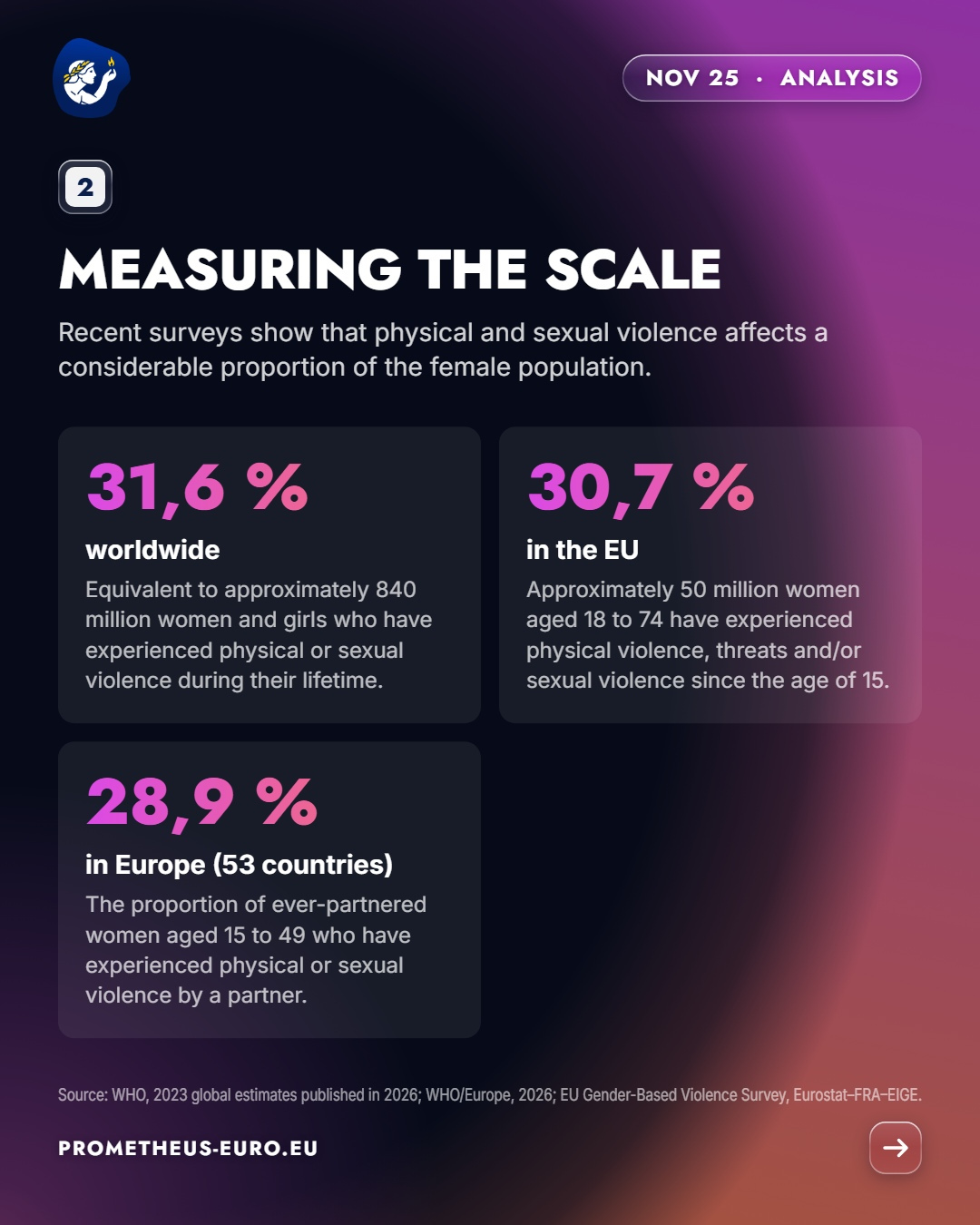
The latest EU-wide survey, conducted among nearly 115,000 women across all 27 Member States, provides unprecedented insight into this reality. It estimates that 30.7% of women aged 18 to 74 have experienced physical violence or threats and/or sexual violence since the age of 15.
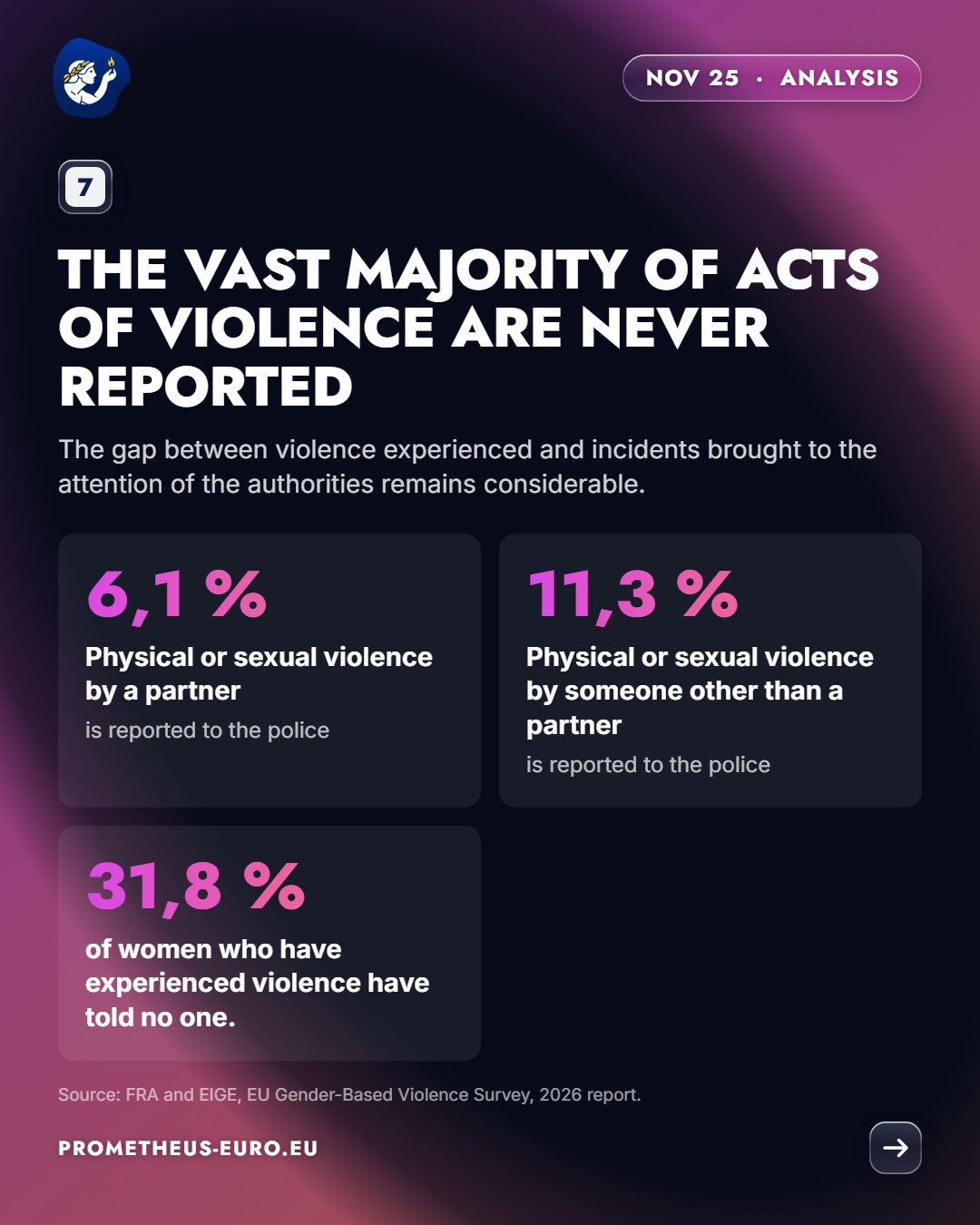
But perhaps the most revealing figure lies elsewhere: only 6.1% of women who have experienced physical or sexual violence by a partner say they reported it to the police. The gap between violence experienced and violence brought to the attention of the authorities is a major political challenge.
This invisibility is not simply a matter of victims remaining silent. It raises questions about trust in institutions, access to reporting mechanisms, protection for those affected and the authorities' ability to prevent repeat offences.
The European Union is beginning to develop a common response. Directive 2024/1385 marks an important step forward, particularly in addressing online violence and differences between national laws. But its effectiveness will depend on its transposition and, above all, its practical implementation in Member States by June 2027.
The challenge for Europe is therefore twofold: to make violence visible, and then to ensure that every report can lead to meaningful protection.
PromethEUs | Making sense of European affairs.
#Europe #EuropeanUnion #WomensRights #ViolenceAgainstWomen #PublicPolicy
Sources
3. WHO, 2023 global estimates published in 2026; WHO/Europe, 2026; EU Gender-Based Violence Survey, Eurostat–FRA–EIGE.
4. Eurostat
5. FRA and EIGE, EU Gender-Based Violence Survey, 2026 report.
7. FRA and EIGE, EU Gender-Based Violence Survey, 2026 report.
8. FRA and EIGE, EU Gender-Based Violence Survey, 2026 report.
10. Eurostat, dataset crim_hom_vrel, 2026 report.
11. EIGE, The Costs of Gender-Based Violence in the European Union, 2021.
Loe seda karusselli tekstina
-
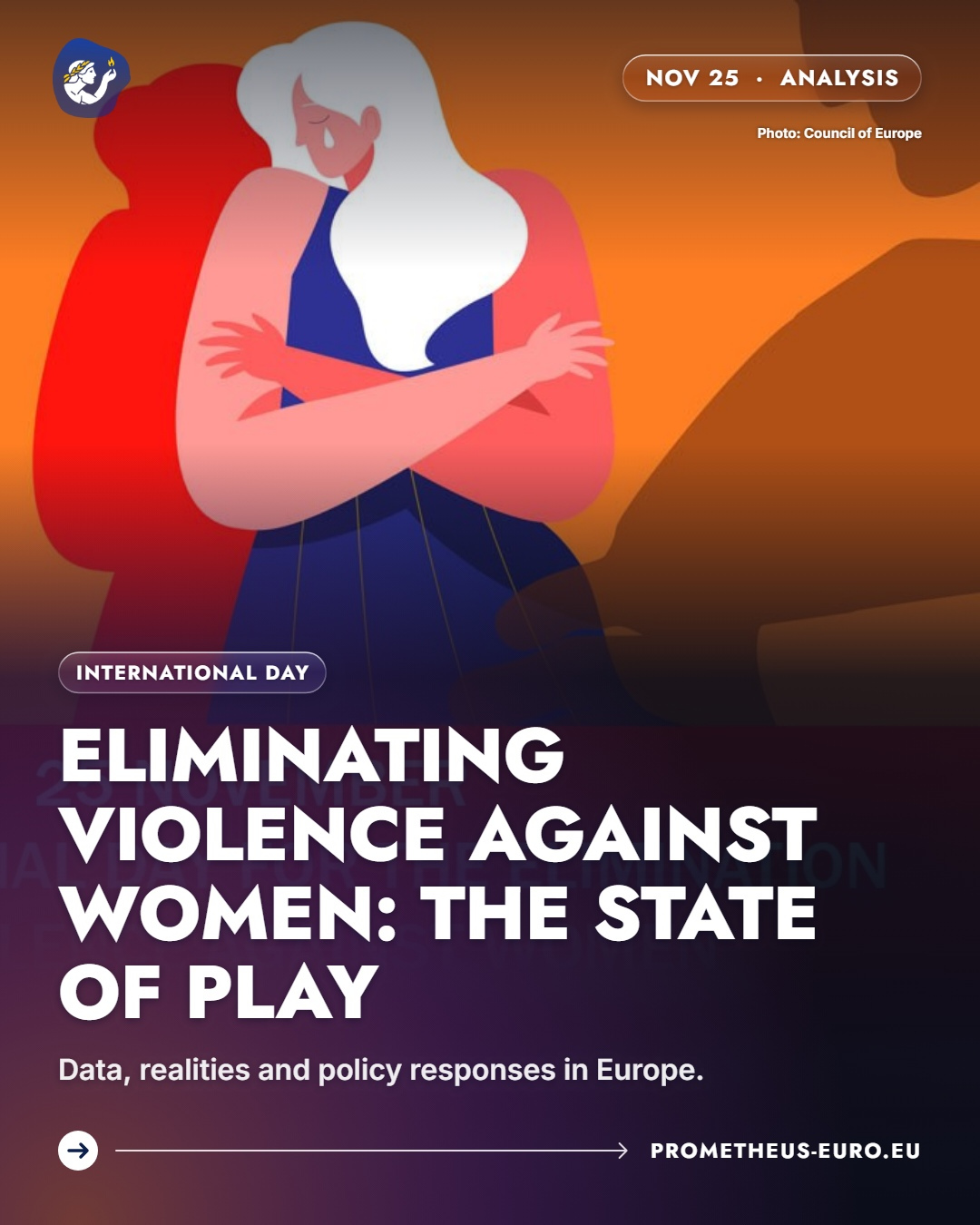
International Day
Eliminating Violence Against Women: The State of Play
Data, realities and policy responses in Europe.
-
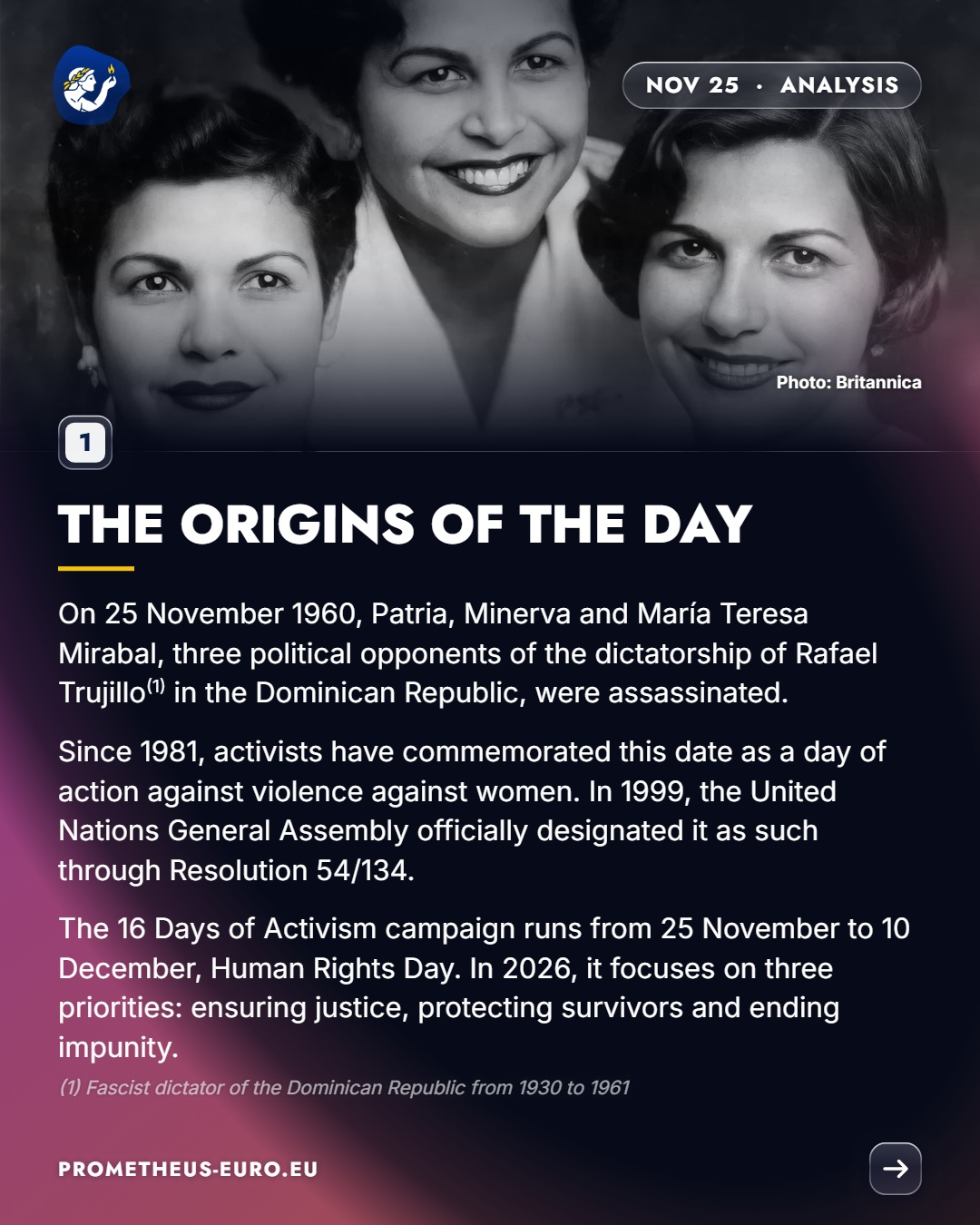
The origins of the day
On 25 November 1960, Patria, Minerva and María Teresa Mirabal, three political opponents of the dictatorship of Rafael Trujillo^^(1)^^ in the Dominican Republic, were assassinated.
Since 1981, activists have commemorated this date as a day of action against violence against women. In 1999, the United Nations General Assembly officially designated it as such through Resolution 54/134.
The 16 Days of Activism campaign runs from 25 November to 10 December, Human Rights Day. In 2026, it focuses on three priorities: ensuring justice, protecting survivors and ending impunity. -
Measuring the scale
Recent surveys show that physical and sexual violence affects a considerable proportion of the female population.
Allikas : WHO, 2023 global estimates published in 2026; WHO/Europe, 2026; EU Gender-Based Violence Survey, Eurostat–FRA–EIGE.
-
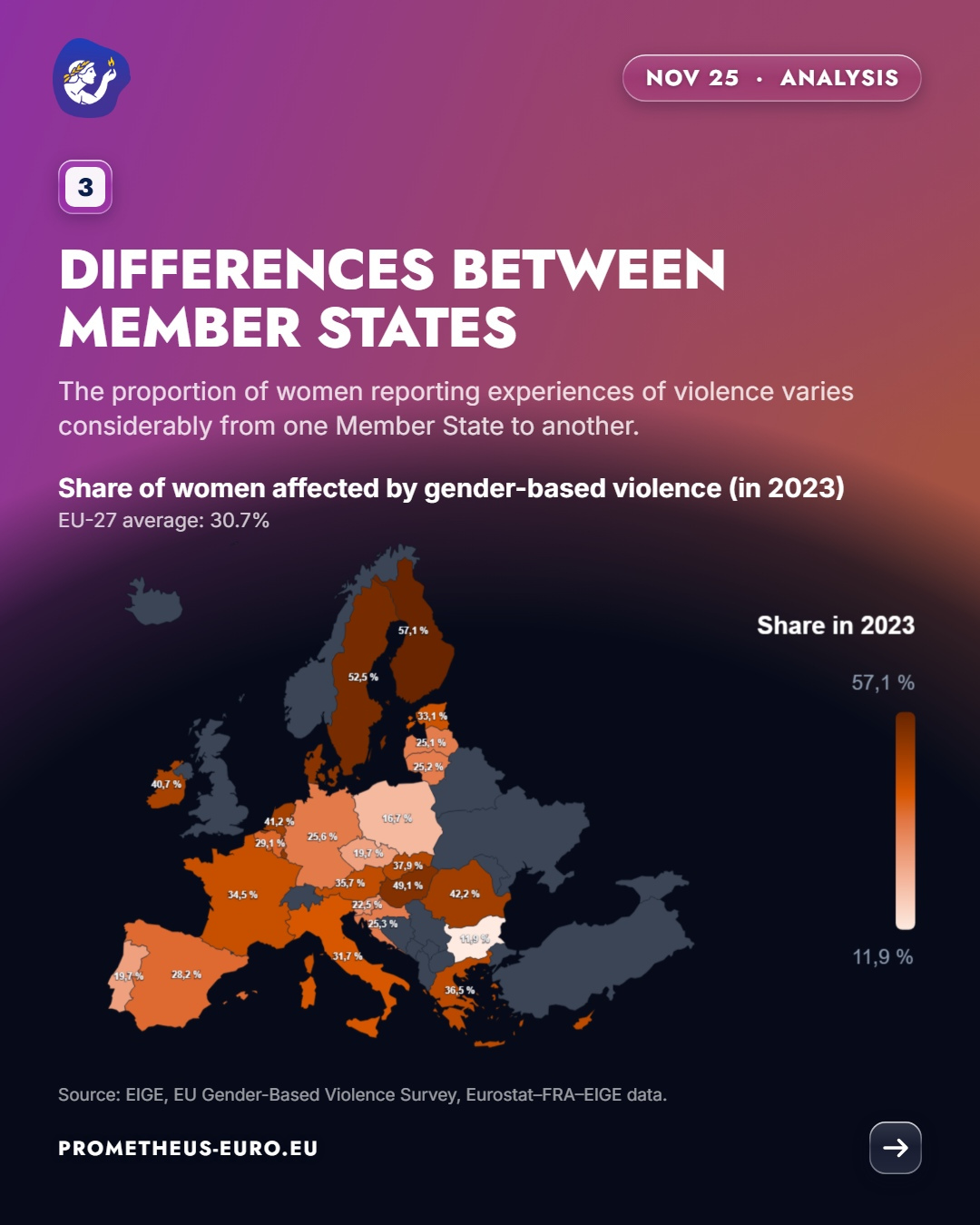
Differences between Member States
The proportion of women reporting experiences of violence varies considerably from one Member State to another.
Allikas : Eurostat
-
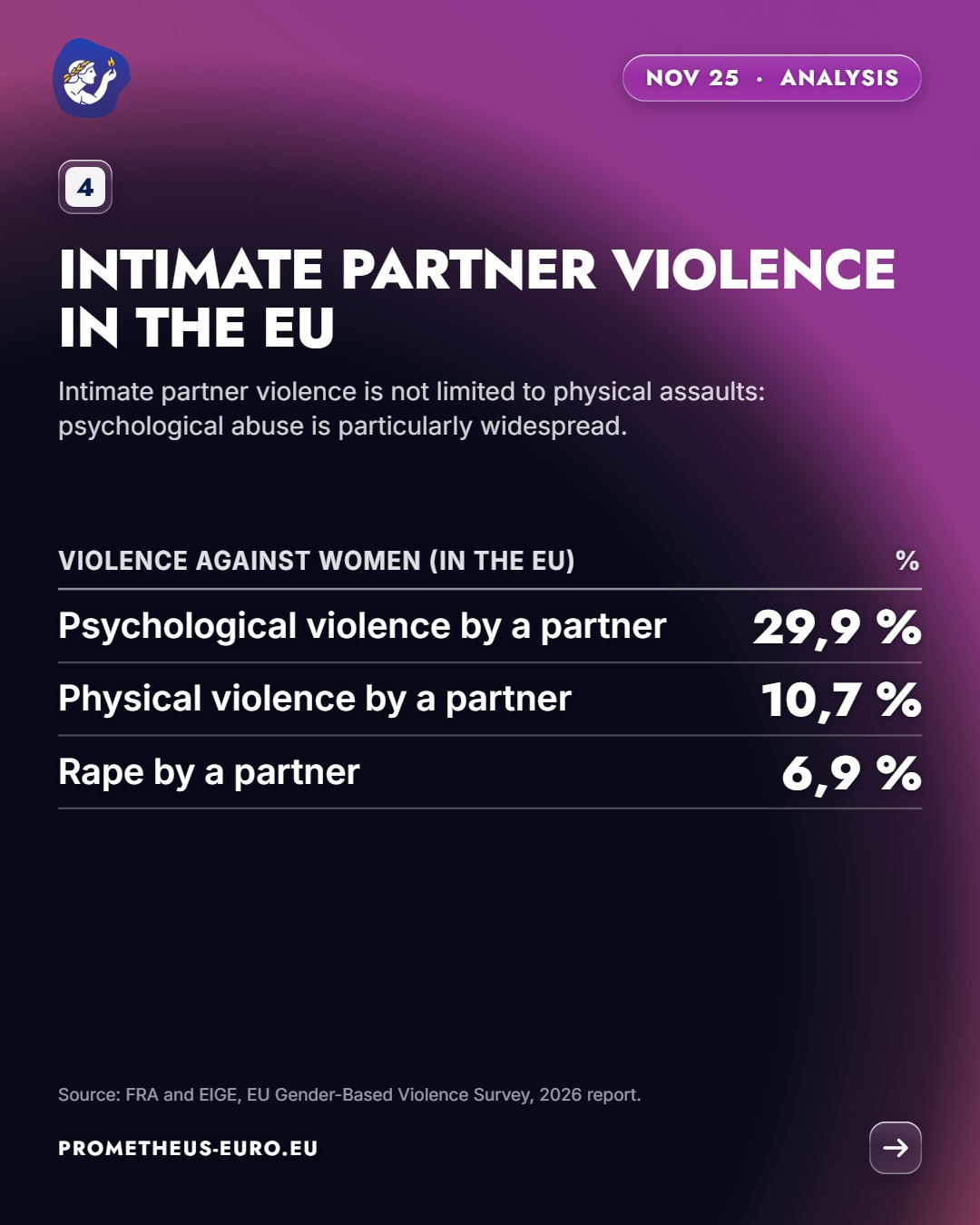
Intimate partner violence in the EU
Intimate partner violence is not limited to physical assaults: psychological abuse is particularly widespread.
Allikas : FRA and EIGE, EU Gender-Based Violence Survey, 2026 report.
-
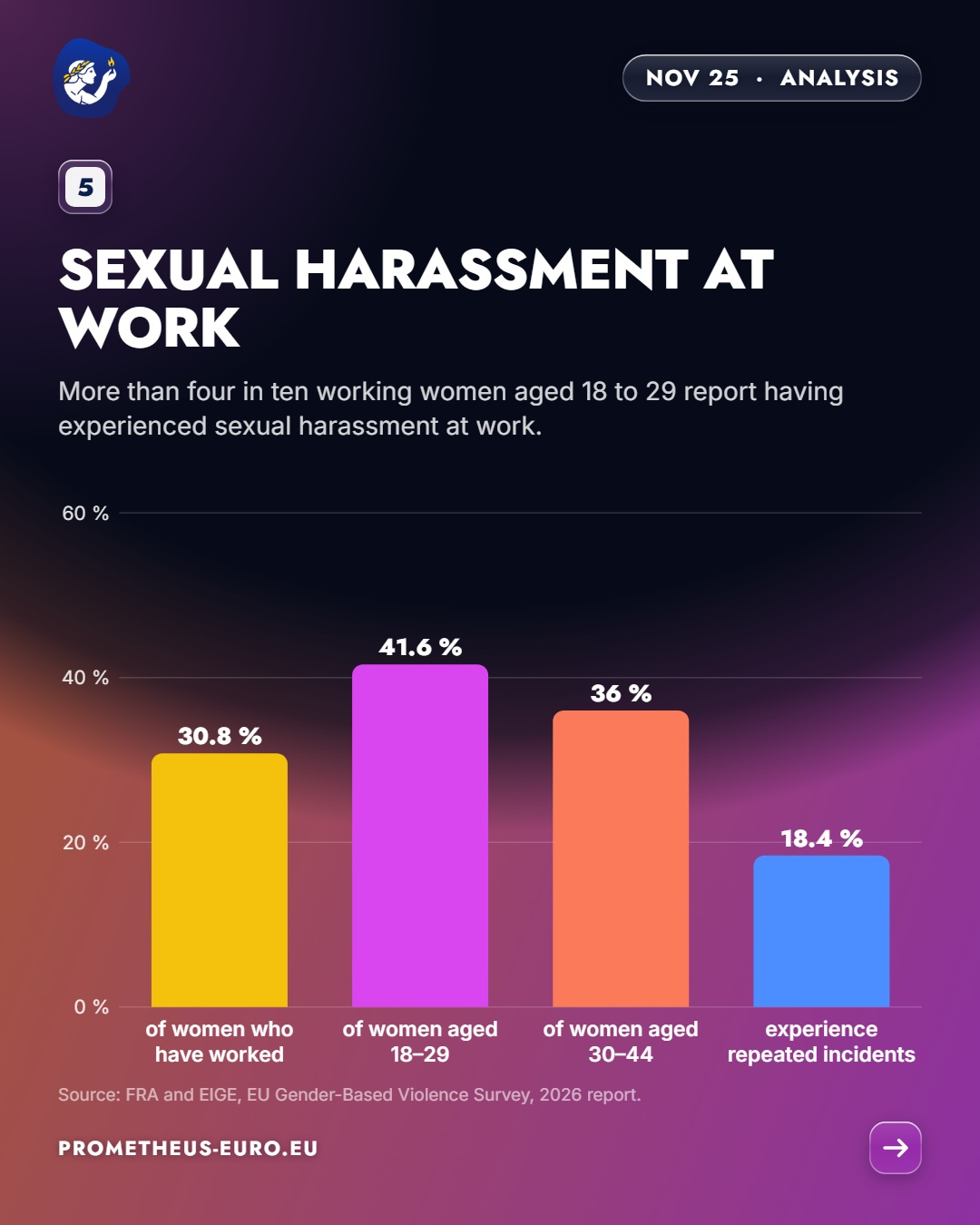
Sexual harassment at work
More than four in ten working women aged 18 to 29 report having experienced sexual harassment at work.
-
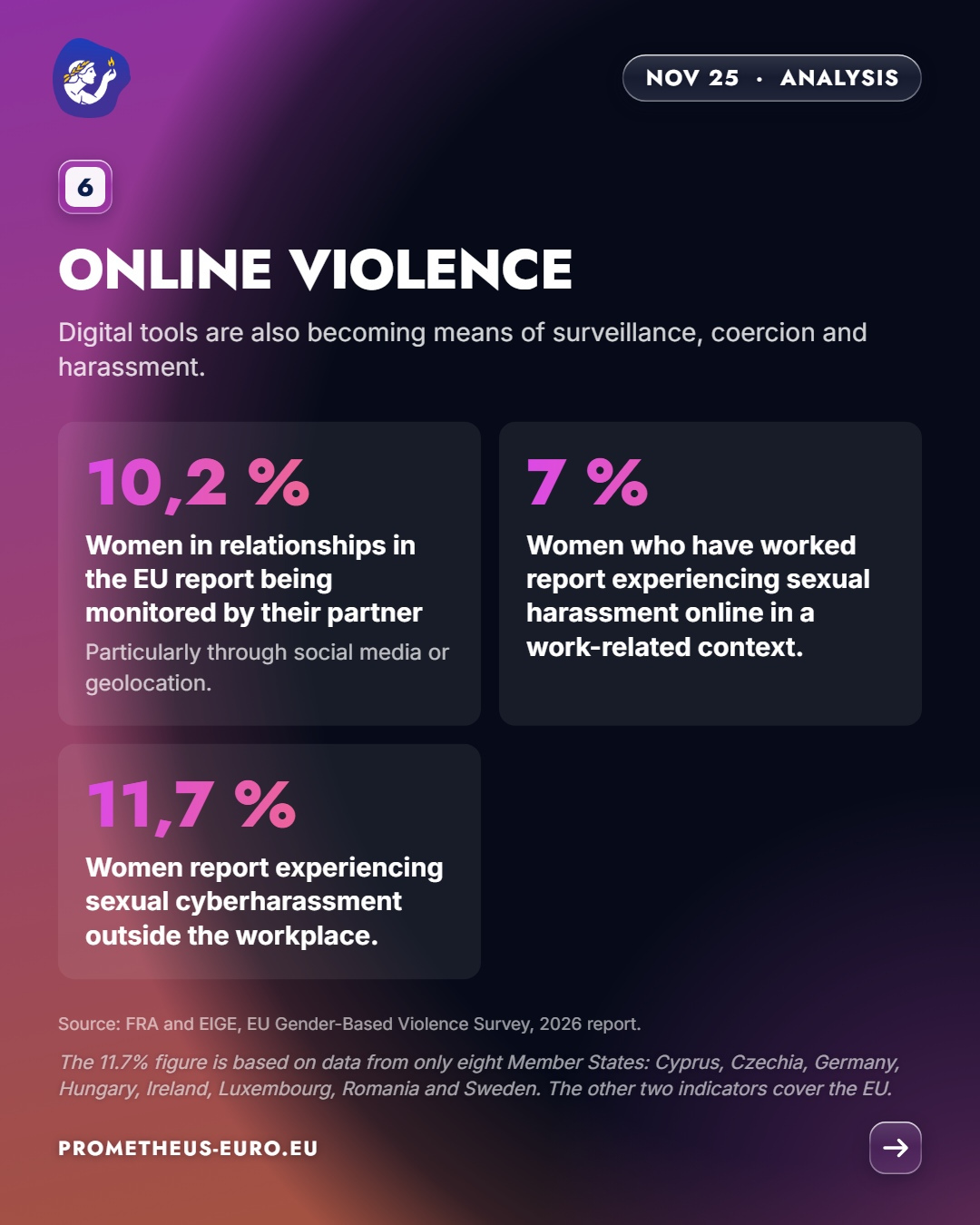
Online violence
Digital tools are also becoming means of surveillance, coercion and harassment.
Allikas : FRA and EIGE, EU Gender-Based Violence Survey, 2026 report.
-
THE VAST MAJORITY OF ACTS OF VIOLENCE ARE NEVER REPORTED
The gap between violence experienced and incidents brought to the attention of the authorities remains considerable.
Allikas : FRA and EIGE, EU Gender-Based Violence Survey, 2026 report.
-
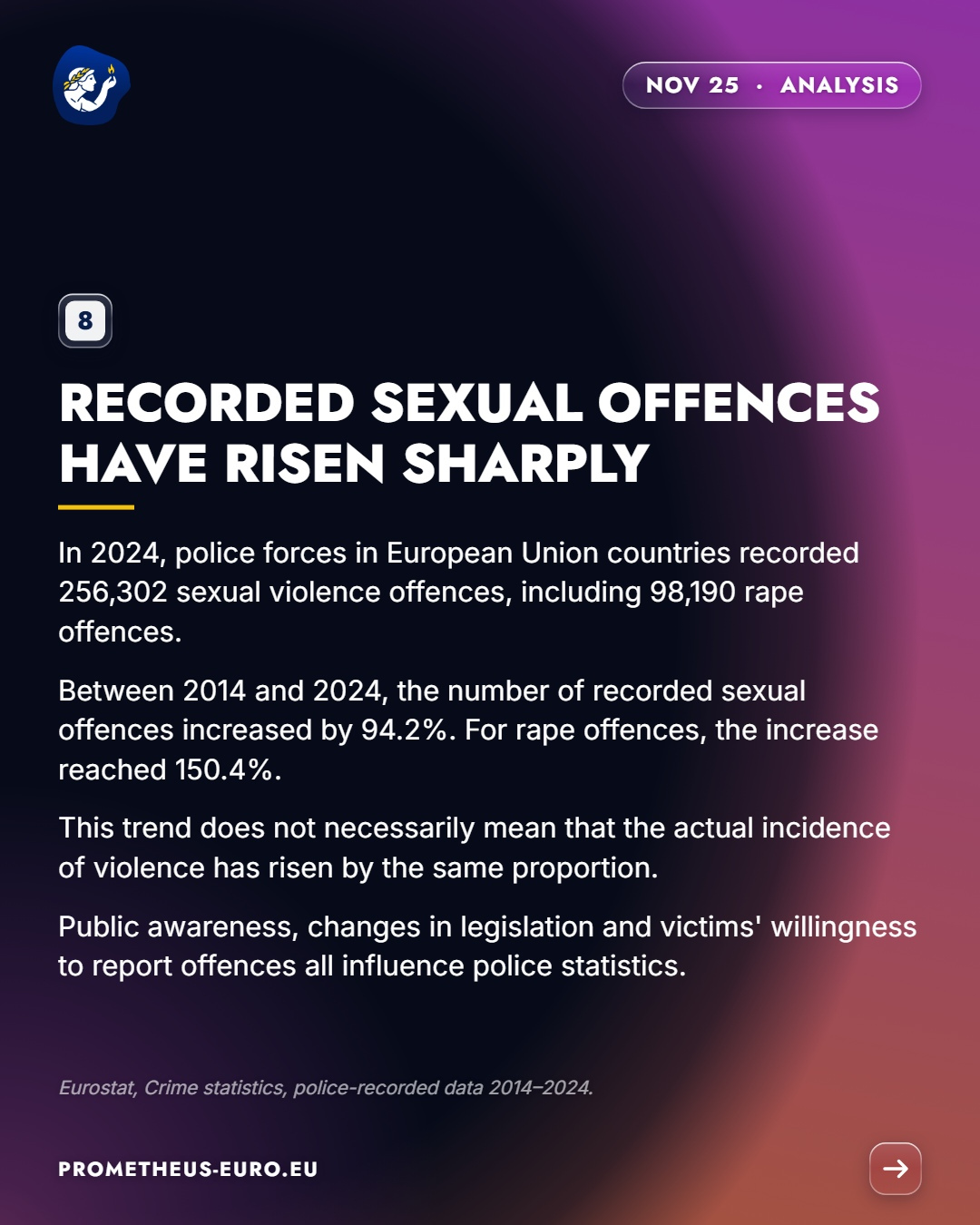
RECORDED SEXUAL OFFENCES HAVE RISEN SHARPLY
In 2024, police forces in European Union countries recorded 256,302 sexual violence offences, including 98,190 rape offences.
Between 2014 and 2024, the number of recorded sexual offences increased by 94.2%. For rape offences, the increase reached 150.4%.
This trend does not necessarily mean that the actual incidence of violence has risen by the same proportion.
Public awareness, changes in legislation and victims' willingness to report offences all influence police statistics. -
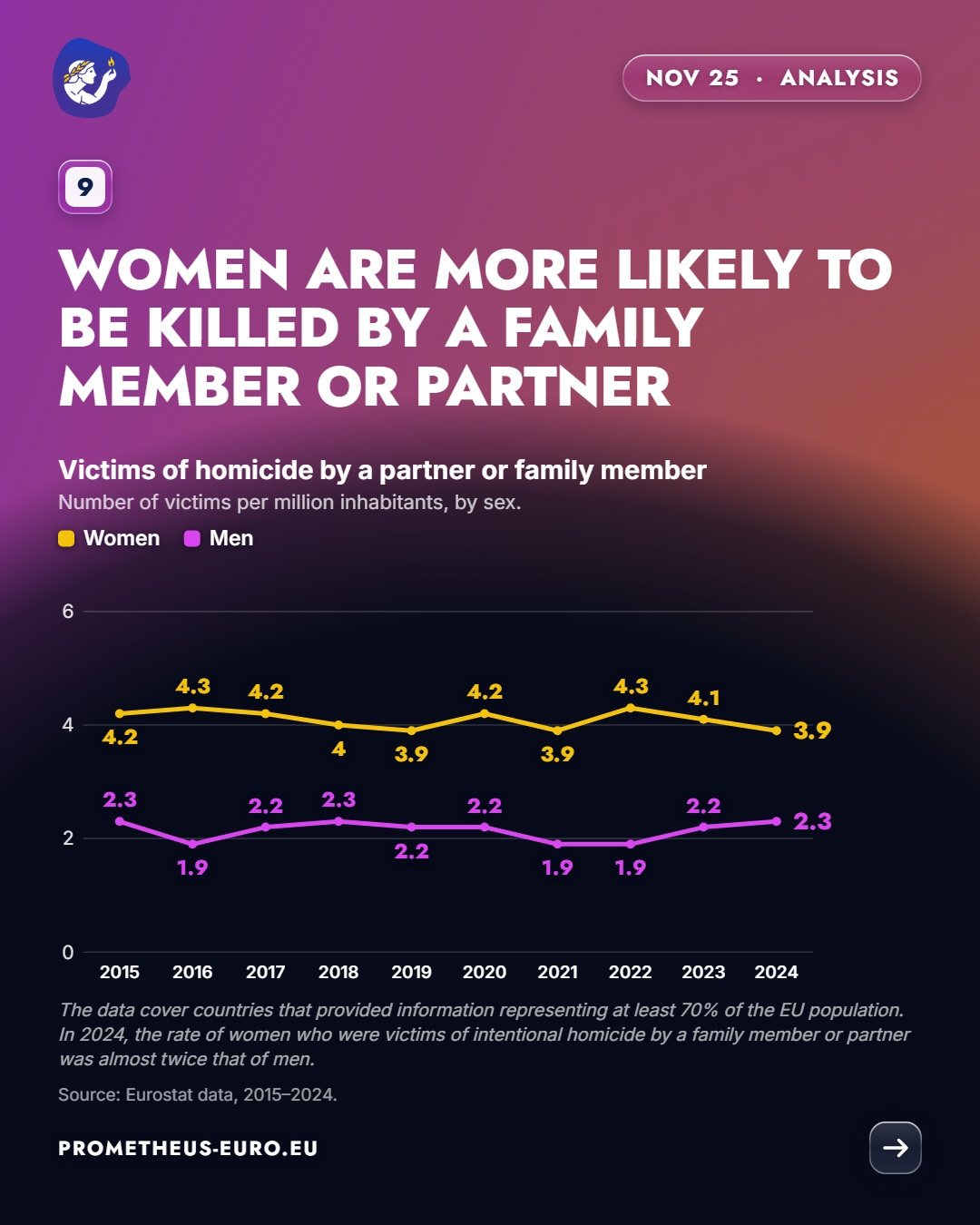
WOMEN ARE MORE LIKELY TO BE KILLED BY A FAMILY MEMBER OR PARTNER
Allikas : Eurostat, dataset crim_hom_vrel, 2026 report.
-
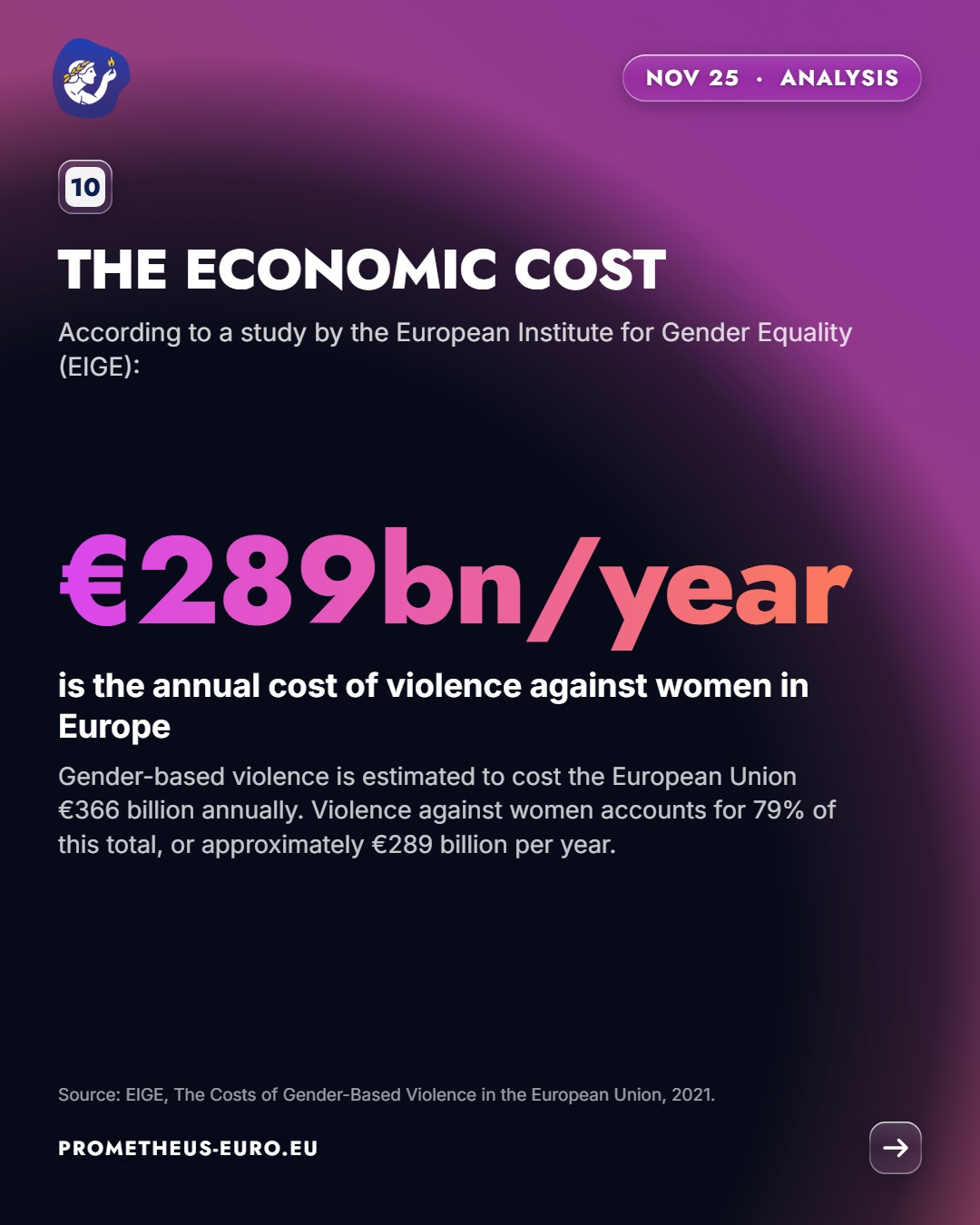
The economic cost
According to a study by the European Institute for Gender Equality (EIGE):
Allikas : EIGE, The Costs of Gender-Based Violence in the European Union, 2021.
-
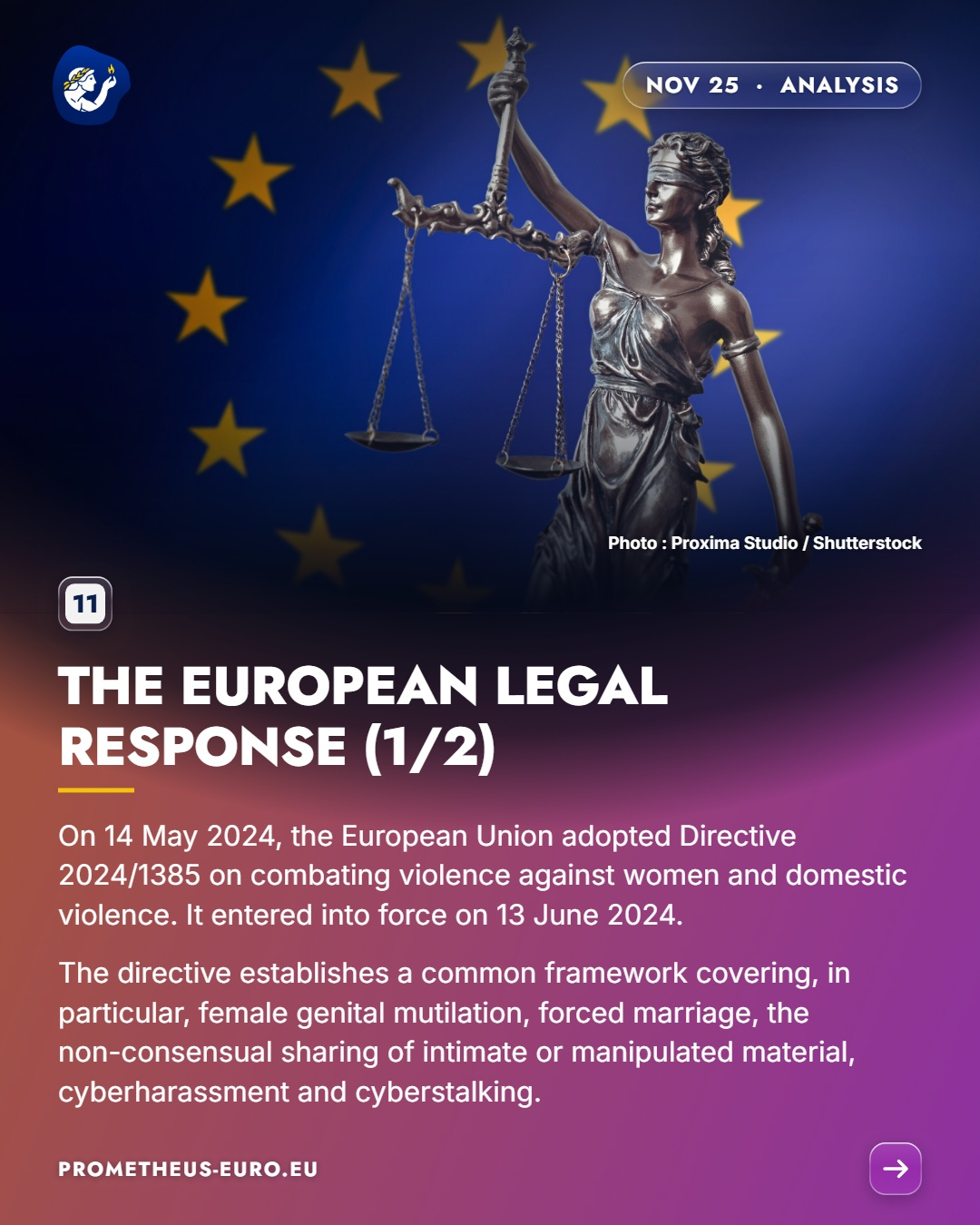
The European legal response (1/2)
On 14 May 2024, the European Union adopted Directive 2024/1385 on combating violence against women and domestic violence. It entered into force on 13 June 2024.
The directive establishes a common framework covering, in particular, female genital mutilation, forced marriage, the non-consensual sharing of intimate or manipulated material, cyberharassment and cyberstalking. -
The European legal response (2/2)
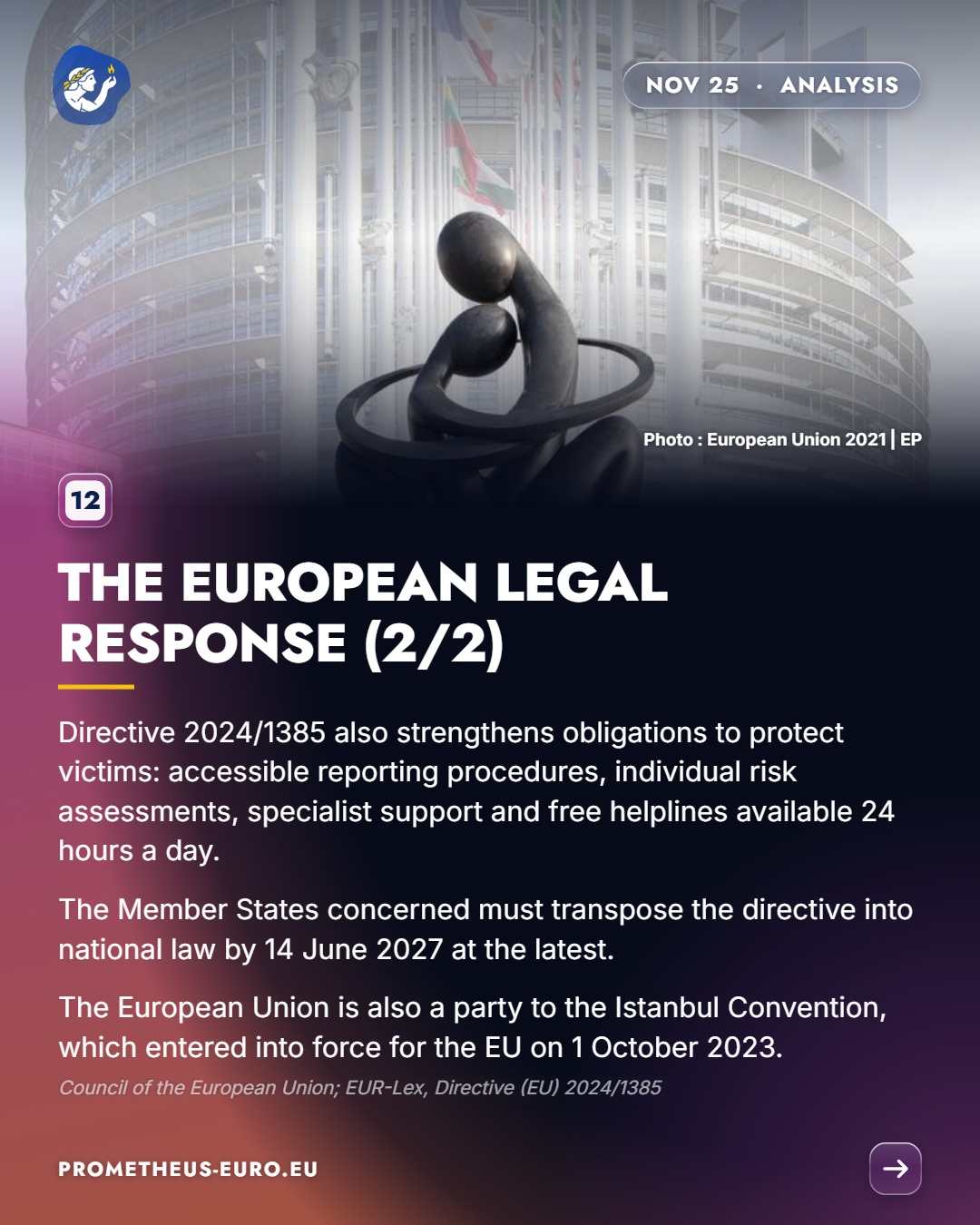
Directive 2024/1385 also strengthens obligations to protect victims: accessible reporting procedures, individual risk assessments, specialist support and free helplines available 24 hours a day.
The Member States concerned must transpose the directive into national law by 14 June 2027 at the latest.
The European Union is also a party to the Istanbul Convention, which entered into force for the EU on 1 October 2023. -
European mobilisation
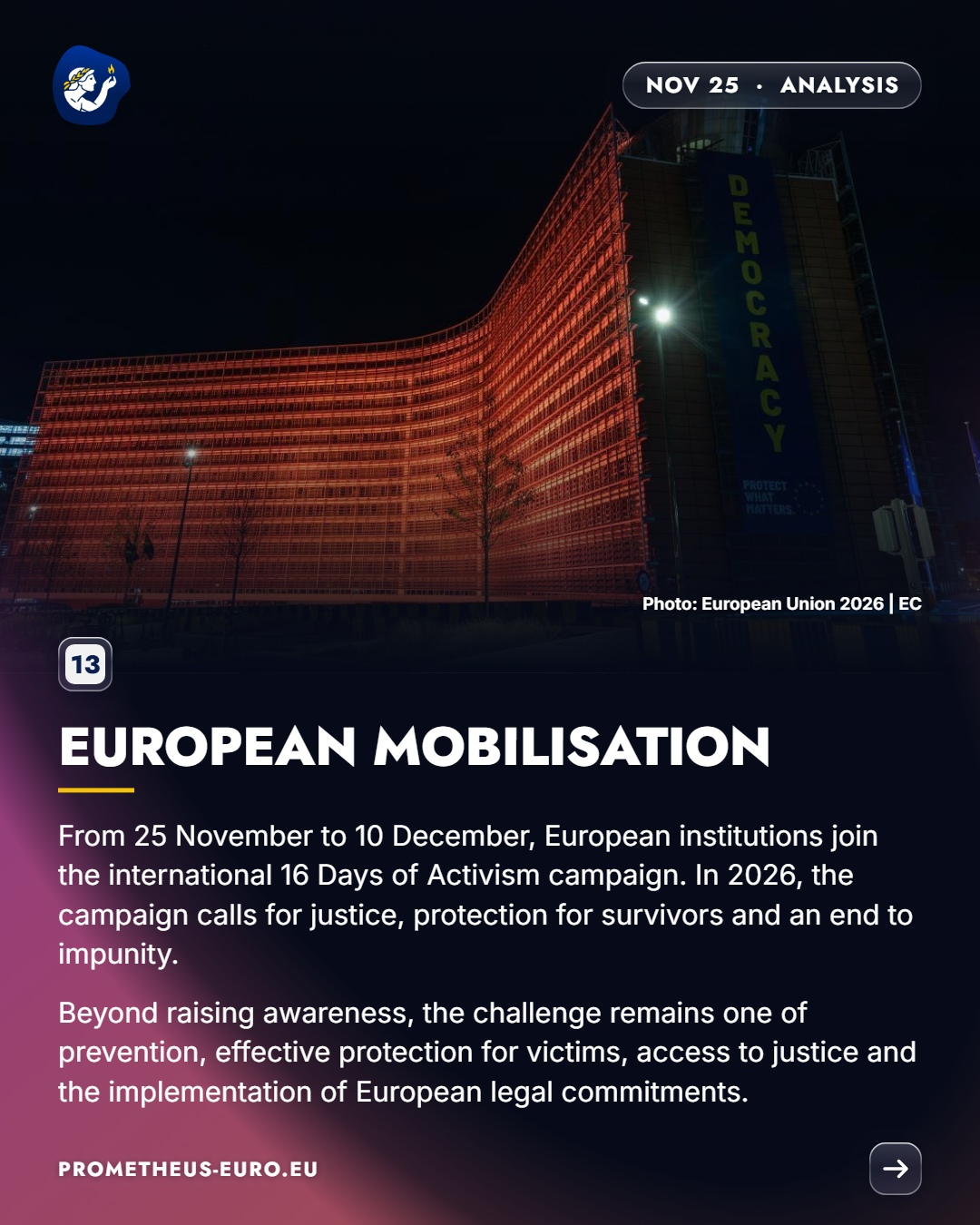
From 25 November to 10 December, European institutions join the international 16 Days of Activism campaign. In 2026, the campaign calls for justice, protection for survivors and an end to impunity.
Beyond raising awareness, the challenge remains one of prevention, effective protection for victims, access to justice and the implementation of European legal commitments.