
 EN
EN 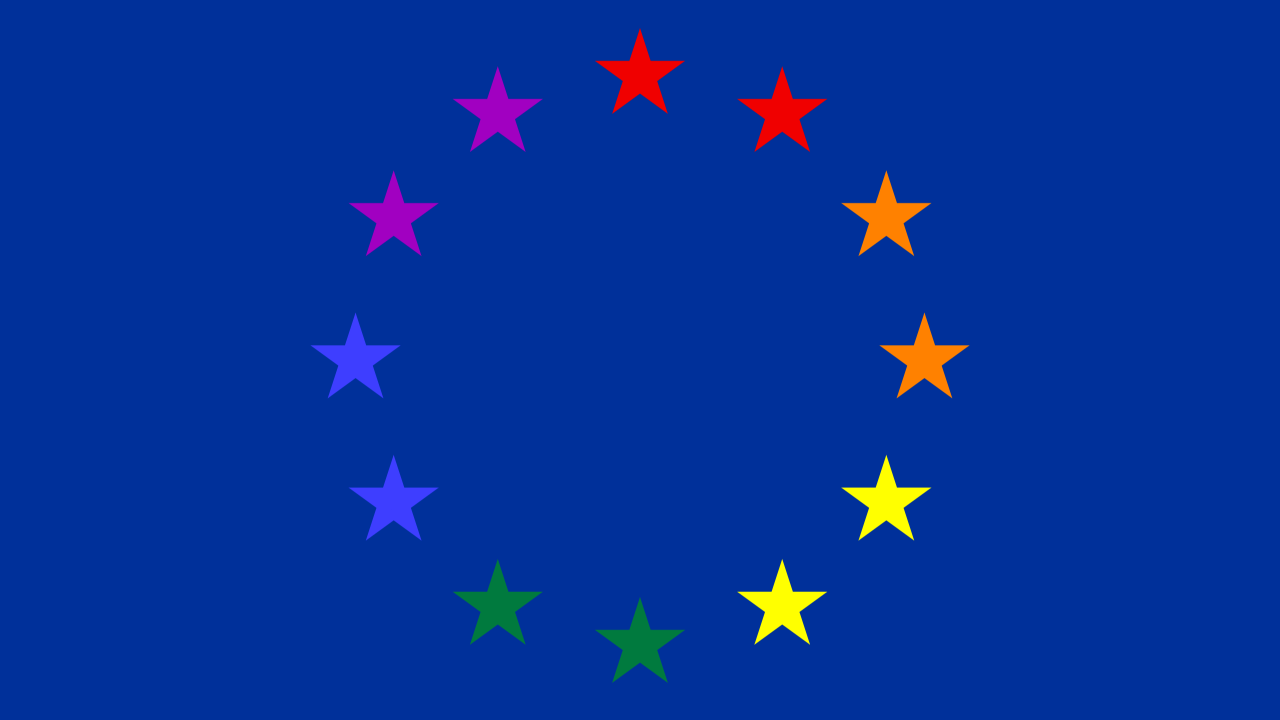
A historic milestone for European democracy and LGBTQ+ rights in Europe.
Contents
On May 16, 2025, the eve of the International Day Against Homophobia, Transphobia, and Biphobia, a European Citizens' Initiative (ECI) reached the symbolic threshold of one million signatures in at least seven Member States. Its goal? To ban at the European level the practices known as "conversion therapies", which claim to change the sexual orientation or gender identity of LGBTQ+ persons, whereas they are unanimously condemned by international health and human rights bodies not to mention their total lack of scientific basis.
This extraordinary mobilization reminds us of the democratic potential offered by the ECI as a lever for citizen action within the European Union. But what is an ECI, and what can we really hope for from this initiative against conversion therapies?
🧭 What is a European Citizens' Initiative (ECI)?
Introduced by the Treaty of Lisbon in 2009, implemented in 2012 and governed since 2020 by Regulation (EU) 2019/788, the ECI allows one million European citizens, residing in at least seven Member States, to support a proposal formulated by an organizing committee composed of at least seven nationals from these States, in order to invite the European Commission to submit a legislative act.
Its journey involves six main stages:
-
Registration with the Commission.
-
Collection of signatures (12 months).
-
Verification by national authorities.
-
Official submission to the Commission.
-
Formal meeting + public hearing at the European Parliament.
-
Response from the Commission within six months.
If the Commission agrees to legislate, the project then enters the ordinary European legislative procedure: proposal → trilogue negotiations between Parliament, Council, and Commission → amendments → final vote.
📜 Historical precedents: a handful of ECIs that bore fruit
Since 2012, only a few ECIs have passed all stages of the process. Some have led to concrete reforms:
✅ Right2Water (2012) – For a right to water
-
1,659,543 validated signatures.
-
Hearing: February 17, 2014.
-
Commission response: March 19, 2014.
-
Result: revision of the Drinking Water Directive. The revised directive was adopted in December 2020 and entered into force in January 2021.
❌ One of Us (2012) – Legal protection of the human embryo
-
1,721,626 validated signatures.
-
Hearing: April 10, 2014.
-
The Commission decided not to legislate.
❌ Stop Vivisection (2012) – Against animal testing
-
1,326,807 validated signatures.
-
The Commission chose to maintain the directive in force.
🟡 Ban Glyphosate (2017)
-
1,070,865 signatures.
-
Although the Commission refused to ban glyphosate, it acted on the other two aspects of the initiative by adopting in 2018 a regulation on the transparency of risk assessments in the agri-food chain, which entered into force in March 2021.
🟡 Minority SafePack (2017) – For minority rights
-
Proposed a series of legislative measures to strengthen cultural diversity.
-
Well received by the European Parliament, but the Commission did not follow up with legislation.
✅ End the Cage Age (2018)
-
Initiative supported by the Parliament in June 2021.
-
Integrated into the Green Deal and the "Farm to Fork" strategy.
-
Commitment by the Commission to progressively ban cages for several animal species by the end of 2023.
🟡 Save Bees and Farmers! (2019)
-
Aims to ban synthetic pesticides by 2035.
-
Supported by the Commission in its response of April 7, 2023, as an important contribution to the Green Deal and biodiversity legislation.
🔍 Observation
To date, out of the 11 ECIs that have reached the required threshold of one million signatures, only two have led to the adoption of European legislation and two have resulted in the adoption of legislation different from the goal initially sought:
-
Right2Water: successful revision of the Drinking Water Directive, entered into force in January 2021.
-
End the Cage Age: adoption of a commitment to progressively integrate the ban on cages in animal farming within the framework of the European Green Deal by the end of 2023.
-
Save Bees and Farmers!: active support by the European Commission in April 2023 and integration into the European Green Deal for sustainable agriculture without synthetic pesticides by 2035.
-
Ban Glyphosate: although the main request for a ban was rejected, this initiative nevertheless resulted in distinct legislation on the transparency of risk assessments in the agri-food chain.
The other initiatives mainly resulted in communications, studies, or non-binding commitments. In other words, reaching the threshold of one million signatures opens the door to dialogue with European institutions, but does not necessarily guarantee the adoption of legislation.
The European Citizens' Initiative (ECI) aiming to ban conversion therapies in the European Union is led by the association ACT - Against Conversion Therapy, co-founded by Mattéo Garguilo, a student at Sciences Po Lyon. This initiative was officially registered by the European Commission on January 24, 2024, and signature collection began on May 17, 2024.
To date, eight EU Member States have adopted a total or partial ban on conversion therapies:
However, in the majority of EU Member States, these practices remain legal or are only partially regulated. The objective of the ECI is therefore to guarantee a common legal framework at the European Union scale, ensuring equal protection for all LGBTQ+ citizens, regardless of their country of residence.
This initiative is part of a broader dynamic of promoting fundamental rights within the EU, and its success will depend on the continued mobilization of citizens and the support of European institutions.
And now? Where does the ECI against conversion therapies stand?
Since the threshold of one million signatures has been reached, the ECI will follow a precise provisional calendar, in accordance with the regulation on ECIs:
🗓️ Provisional calendar of the next steps:
Key upcoming dates:
-
National certification of signatures within 3 months (by mid-August 2025)
-
Official submission to the Commission within 3 months (mid-November 2025 at the latest)
Following this official submission, the stages follow one another over a six-month period:
-
Meeting with the Commission 1 month later (December 2025)
-
Public hearing at the European Parliament within 3 months (late January - early February 2026)
-
Response from the Commission within 6 months (May 2026)
📌 What possible content for this legislation?
The organizers explicitly ask for:
-
The complete ban on conversion "therapies" or "practices" in all Member States, for all age groups.
-
Official recognition of victim status and effective access to reparation.
-
Mandatory training and awareness programs for health professionals, as well as the education sector.
A directive based on Article 19 TFEU (combating discrimination) or on Article 114 TFEU (internal market) could be envisaged in order to harmonize existing national bans and prevent the phenomenon of "conversion tourism".
🏅 What are the chances of success?
🔹 Positive political momentum
-
The European strategy 2020-2025 for LGBTIQ equality already commits the Commission to "work towards ending conversion practices".
-
Several Member States have adopted total bans (Malta, France, Spain) or partial ones (Germany for minors), creating a legal precedent.
🔹 Shared legal competence
-
If "therapies" are practiced as a cross-border service provision, the European legislator can intervene to ensure uniform protection.
-
However, mental health falls primarily under the competence of the States. The directive will therefore have to rely on the free provision of services or consumer protection, as was the case for the ban on female genital mutilation in certain dossiers.
🔹 Oppositions and risks of blockage
-
A few conservative governments might invoke the principle of subsidiarity or religious freedom.
-
Unanimity in the Council is not necessary (ordinary procedure by qualified majority), but a political blockage remains possible.
🔹 ECI Precedents
-
Out of the 11 initiatives having exceeded 1 million signatures, only three have led to the adoption of legislation in line with the initial ECI.
-
Media mobilization and post-signature lobbying will therefore be decisive in maintaining pressure.
Prognosis: 25-35% chance of obtaining at least a proposal for a directive by 2026, but the battle in Parliament and the Council could push adoption to the 2027-2028 horizon.
And then?
-
For citizens: possibility to invoke a single European standard to report or prosecute these practices, regardless of the Member State.
-
For health professionals: clear definition of prohibited acts, inclusion in codes of ethics, harmonized sanctions.
-
For victims: cross-border access to support mechanisms and legal remedies, common recognition of harm.
-
For companies/associations: ban on advertising or offering "conversion practices", including online.
-
For States: obligation to put in place control, training, and statistical data collection mechanisms.
On the other hand, if the Commission chooses not to propose legislation, it will have to provide a detailed public justification.
🎯 Conclusion: a test for European democracy
This initiative represents a potential turning point for LGBTQ+ rights in Europe and a full-scale test of European participatory democracy. It remains to be seen whether the European Commission will be able to rise to the expectations and engagement of over one million European citizens.
👉 To follow the initiative or learn more: 🔗 Official page of the ECI – Ban on conversion practices in the European Union
References
- No sources yet.
No comments yet.